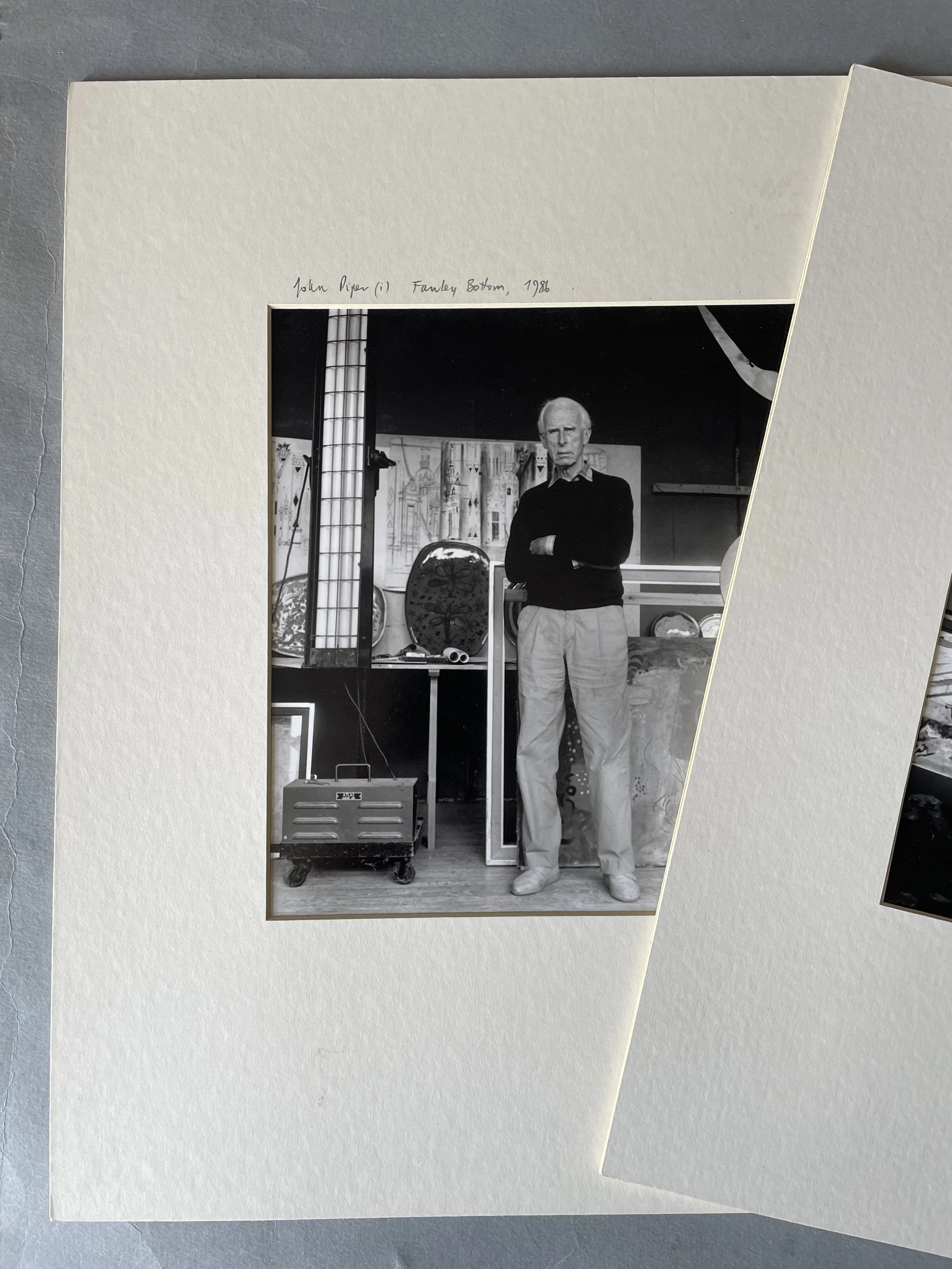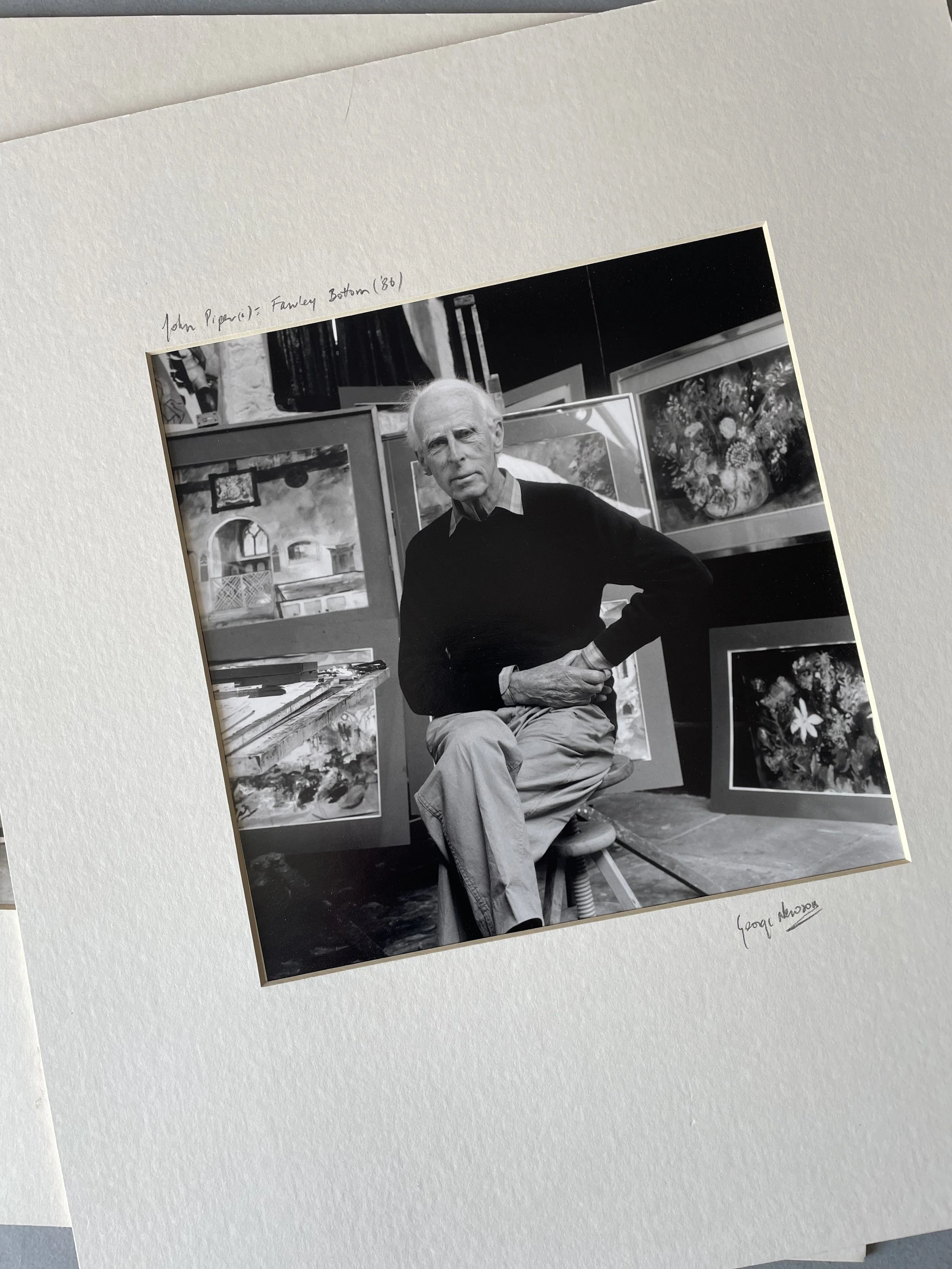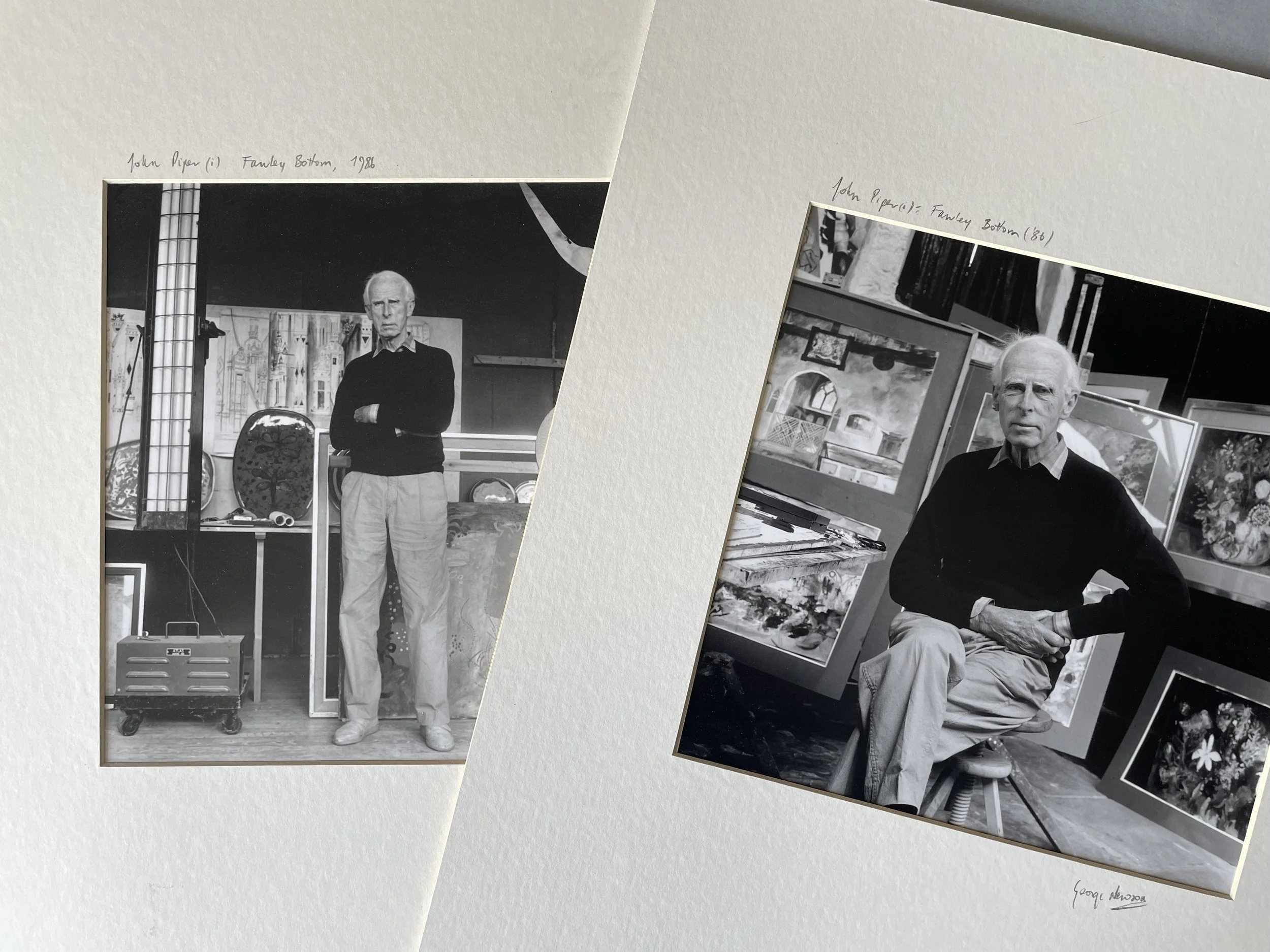
Two photographs, 225 × 228mm of the artist, John Piper (1903-1982) by the composer turned photographer, George Newson (1932-2024), both mounted and signed by Newson to the mount. Both inscribed ‘(John Piper Fawley Bottom, (86)’. Fawley Bottom is the farmhouse near Henley-on-Thames that Piper lived and worked in throughout most of his life, these both taken in Piper’s studio. Newson was a successful composer who rubbed shoulders with some of the greats of avant garde music in the late ‘60’s and early ‘70’s, before taking up photography in the ‘80’s. He appears to have had a talent for above all things, building relationships with interesting artists. The Stormont Studio in Rye held an exhibition of Newson’s photographs of local artists in 1990, but these images are likely to be from their collaboration on Piper’s book, A Painter’s Camera, published by the Tate in 1987.
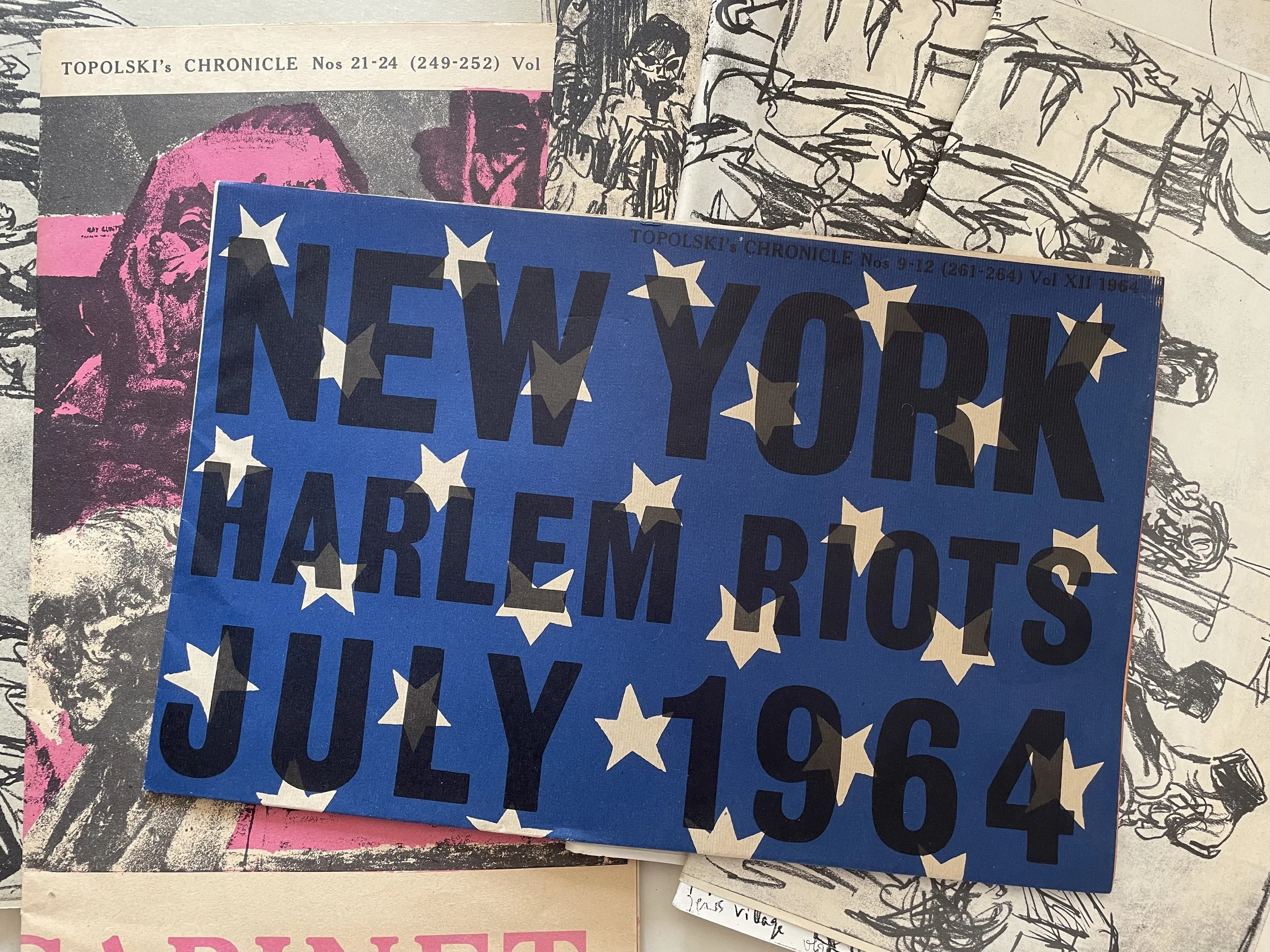
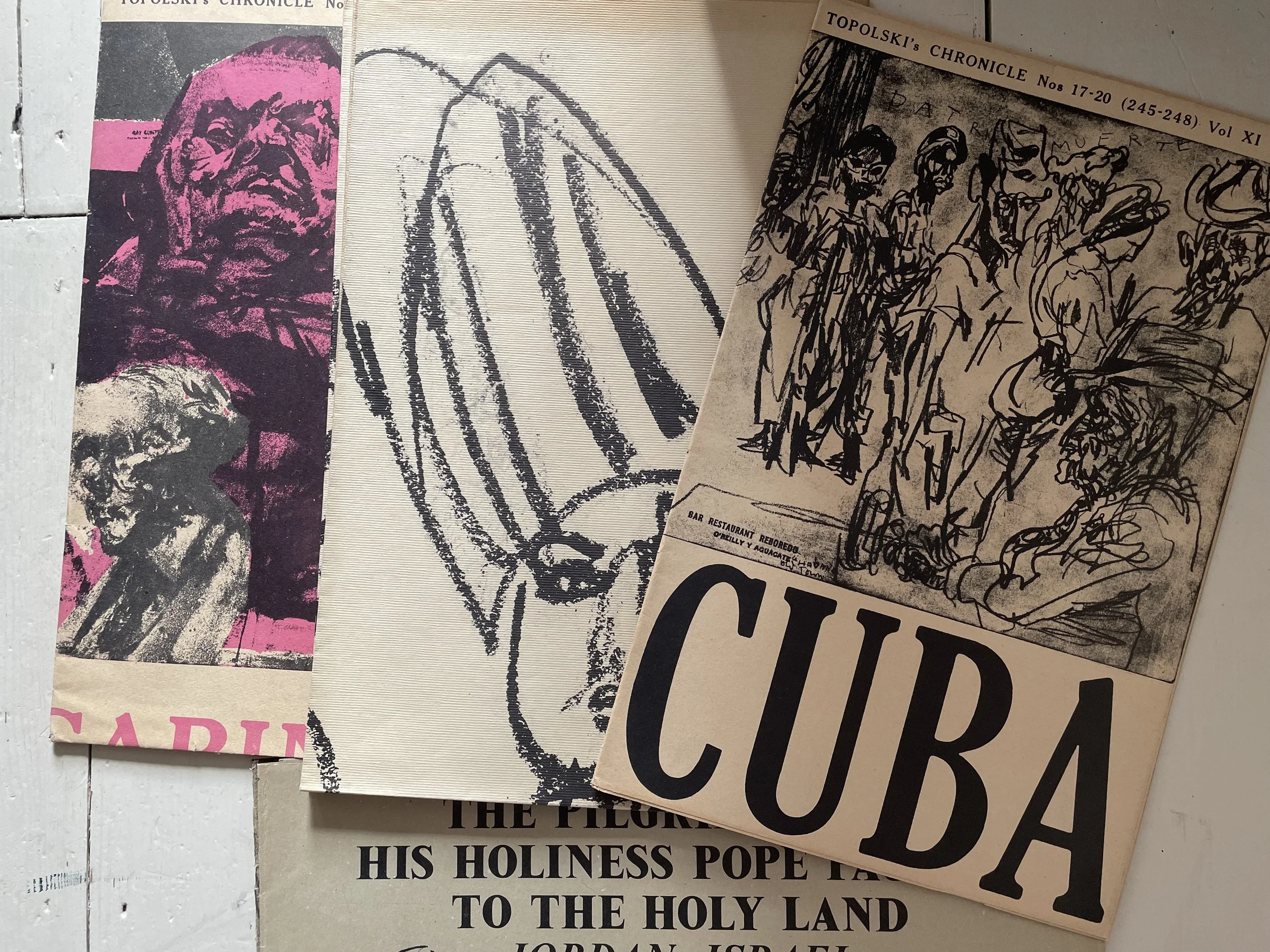
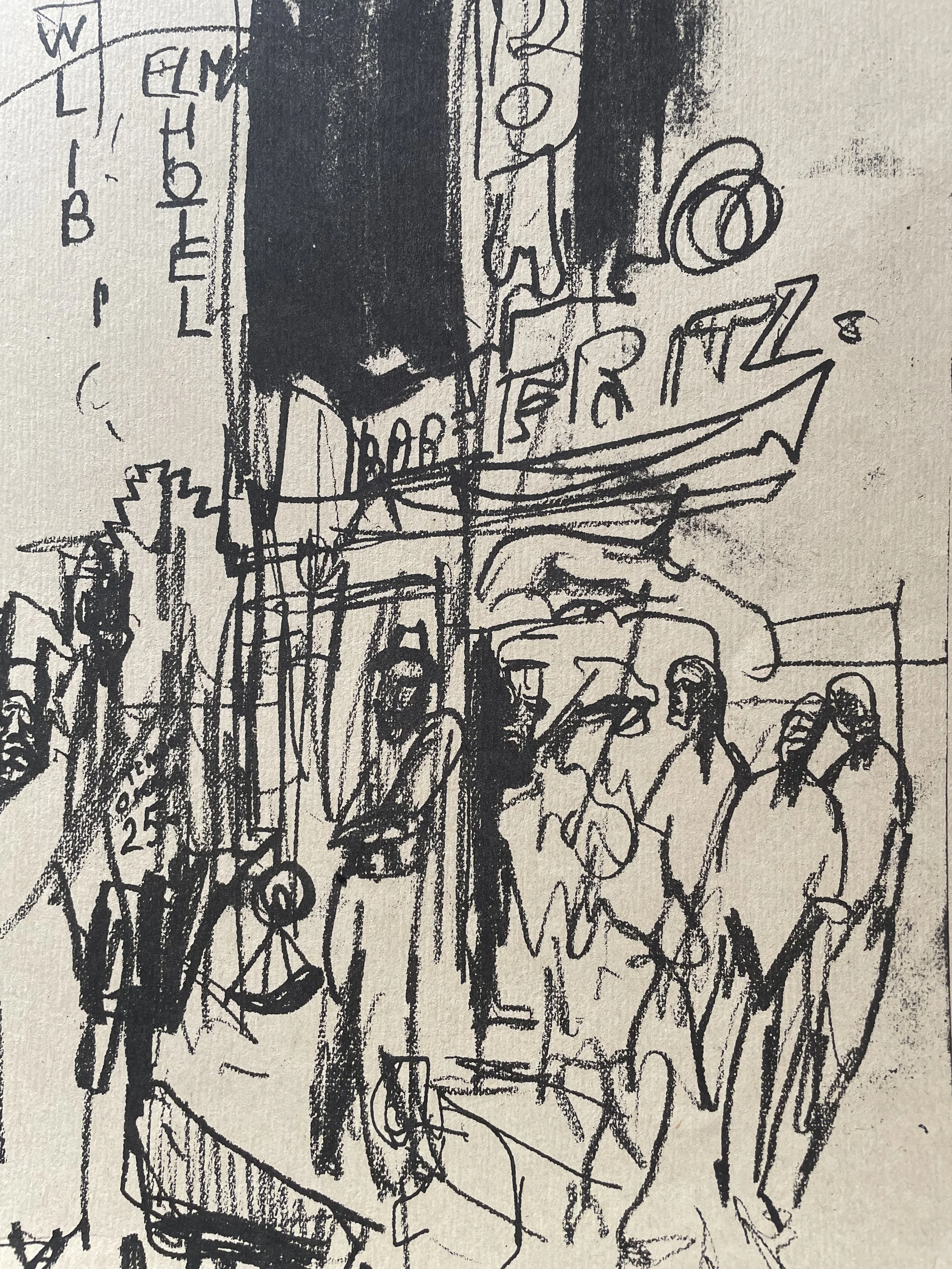
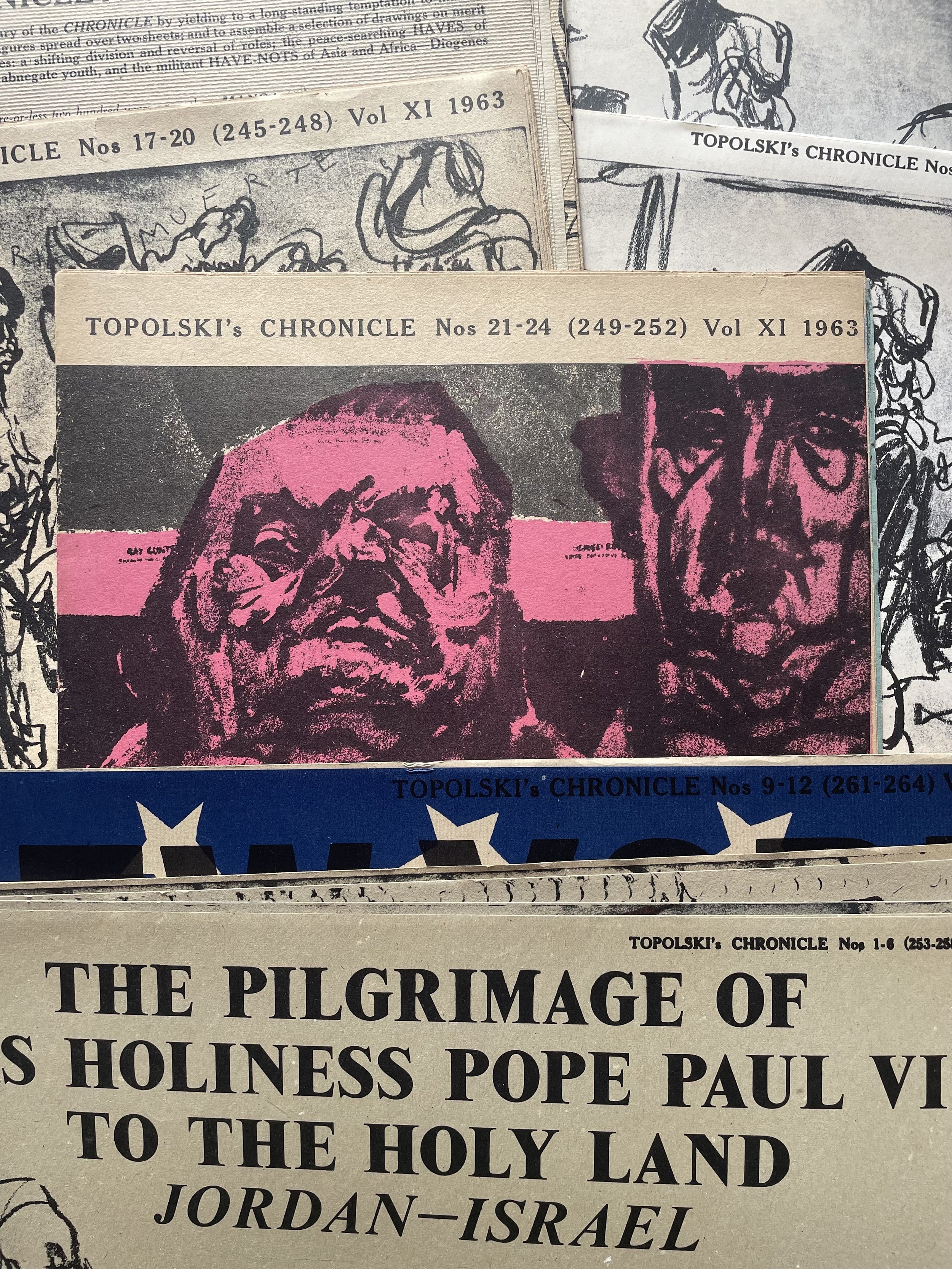
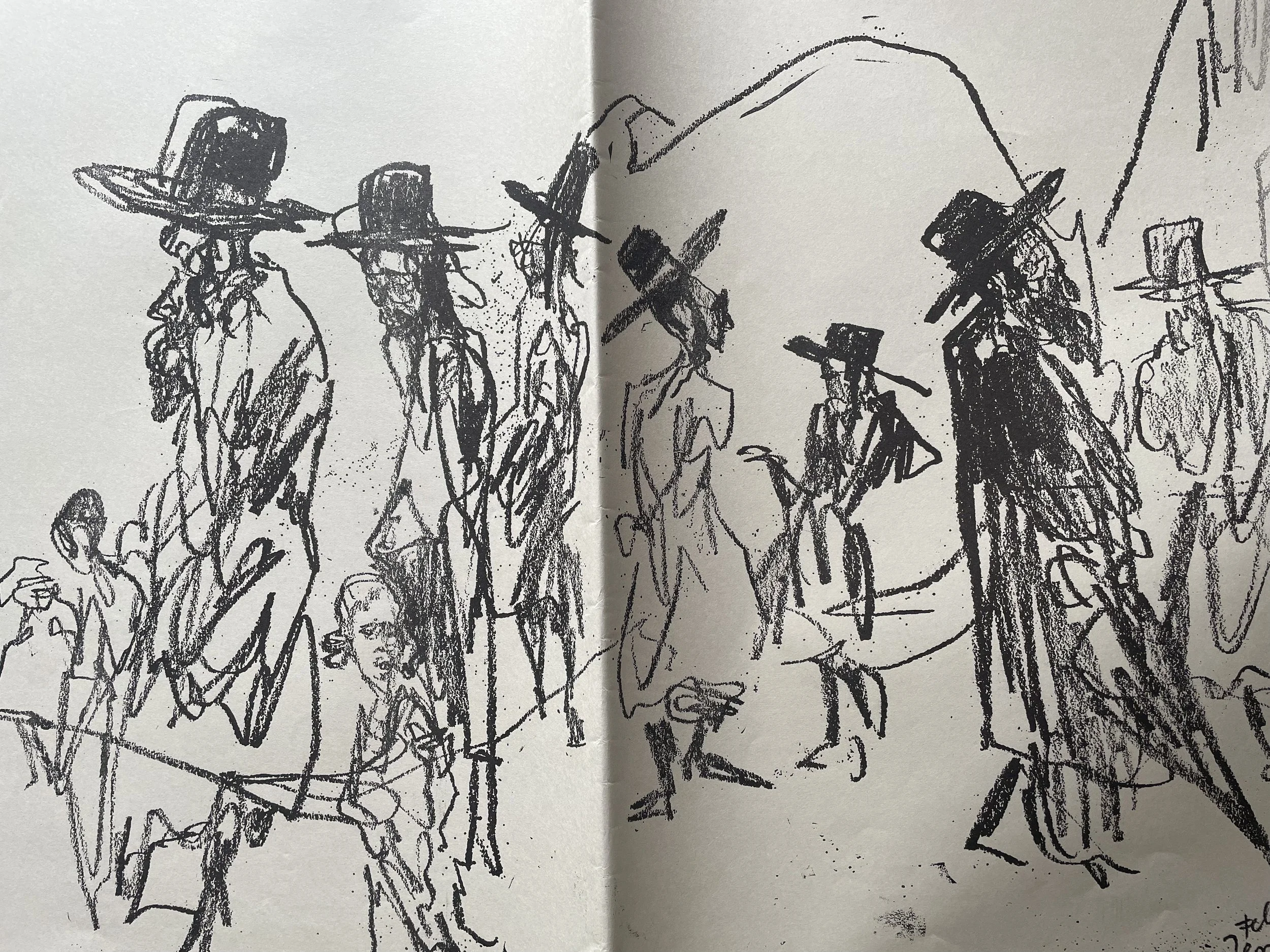
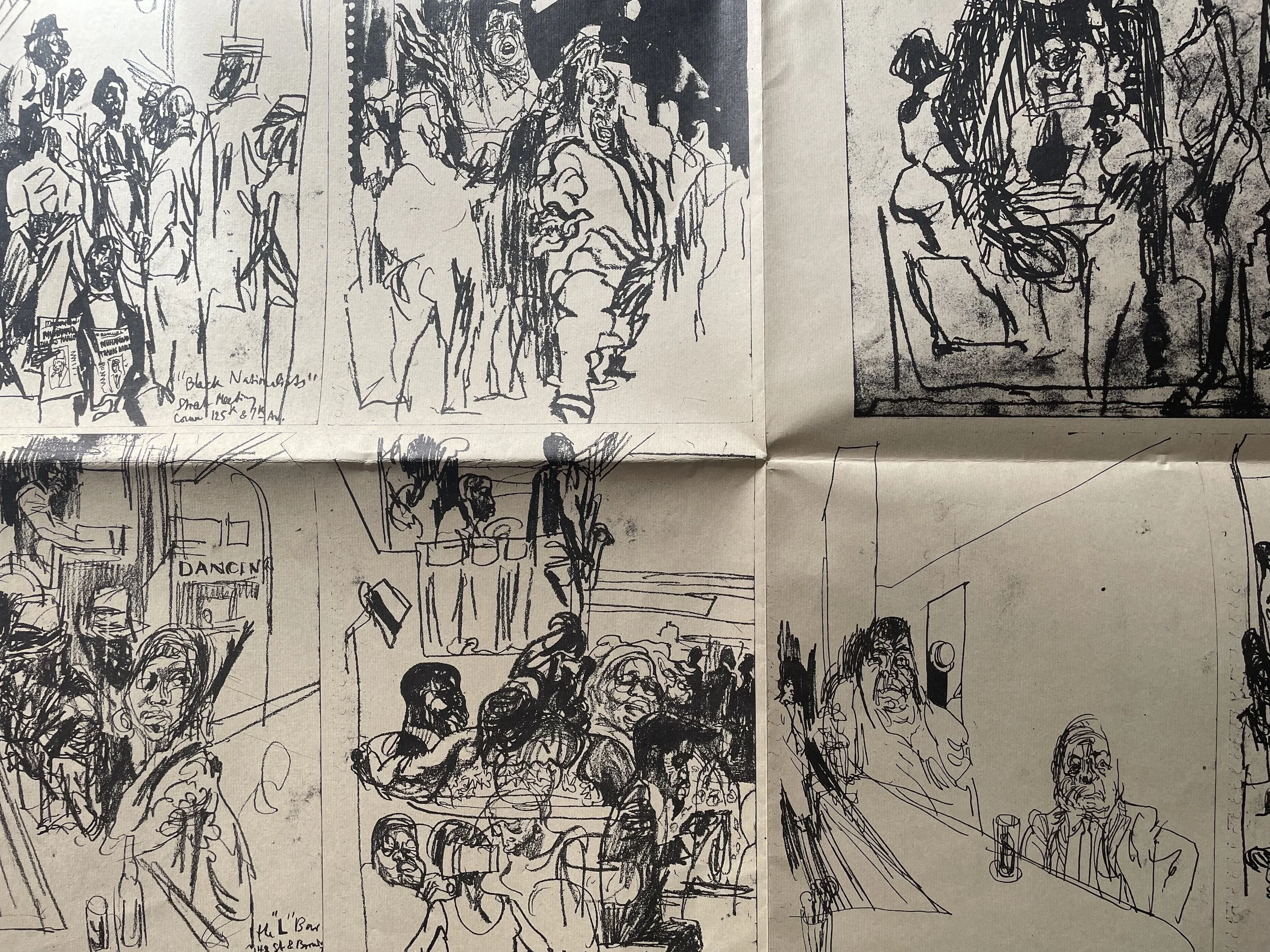
Seven issues of Topolski’s Chronicle, 1963-64, plus a few pages of offprints, including a superbly produced Harlem Riots issue, 1964. The artist, Felix Topolski (1907-1989) produced this series of reportage broadsheets, often single-handedly, using his own drawings (eventually over 2,300) and printed on his own press in his studio under a railway arch in Waterloo, London, from 1953-1982 and distributed it bi-monthly to subscribers worldwide. Predictably slightly chaotically organised, the 24 bi-monthly issues made up one volume (but did several, and how many, parts make up one issue?), this small collection contains No. 1-8 (229-236) Vol XI, 1963, ‘a selection of drawings on merit only’; Nos 10-16 (238-244), Vol XI, 1963, on Israel; plus a duplicate of this issue; Nos 17-20 (245-248), Vol XI, 1963, ‘Cuba’; Nos 21-24 (249-252) Vol XI, 1963 ‘Labour Party Front Bench’; Nos 9-12 (261-264) Vol XII, 1964, ‘Harlem Riots’; Nos 1-6 (253-258) Vol XII, 1964, ‘The Pilgrimage of his Holiness The Pope Paul VI to the Holy Land’; with several pages of offprints, including one in uncoloured and coloured versions, and one ‘with the compliments of the Assistant Audrey Coppard.’
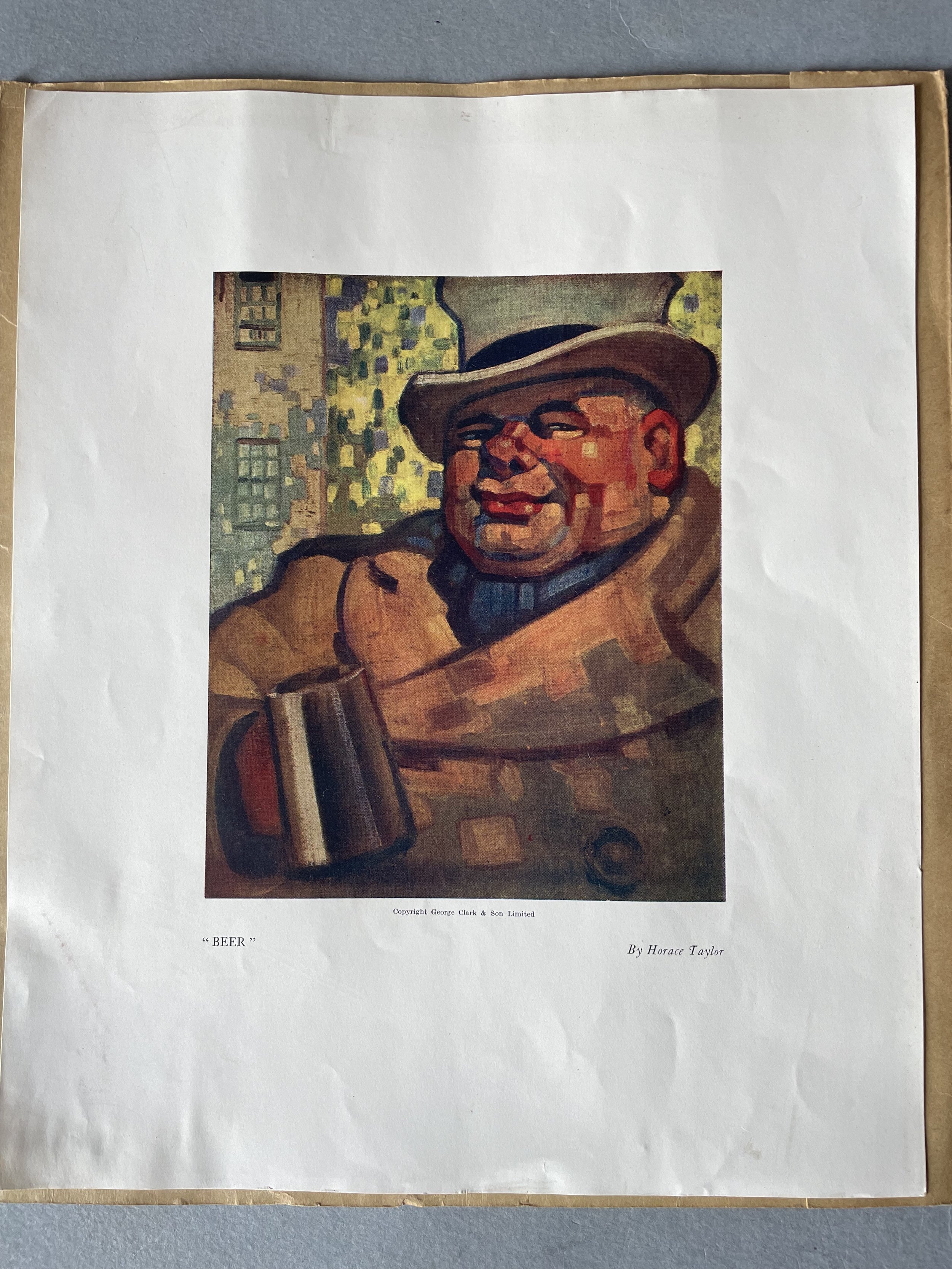
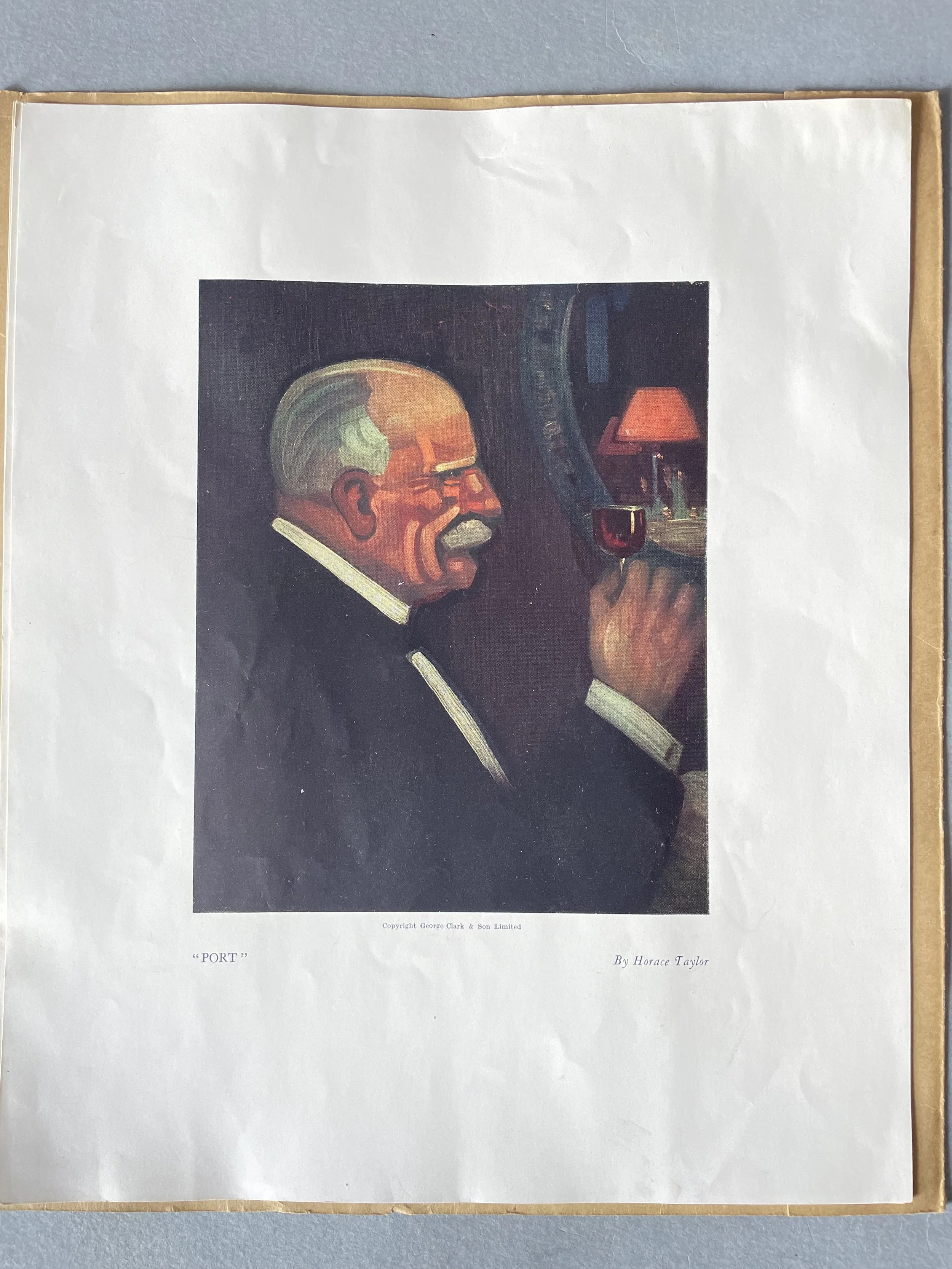
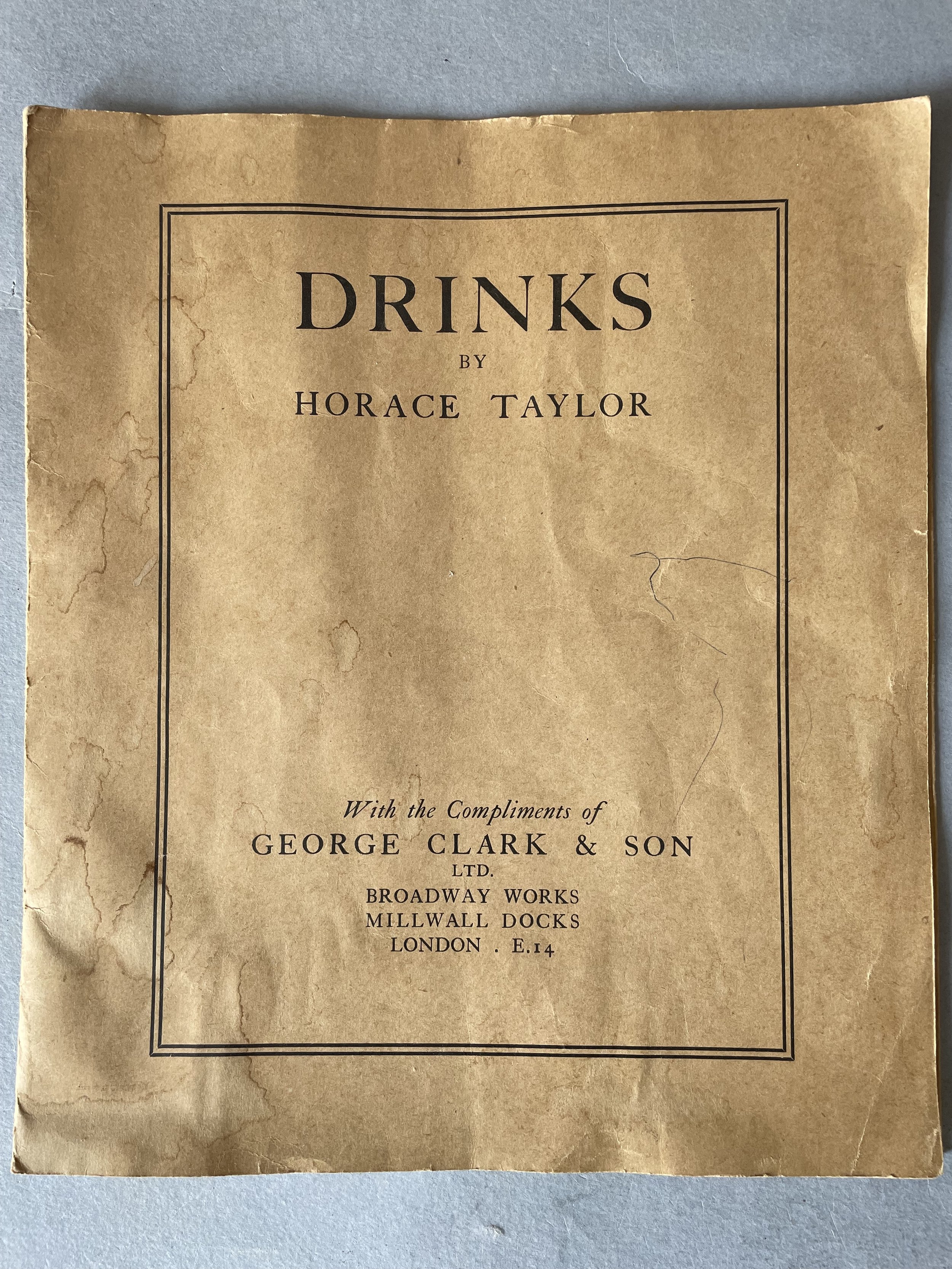
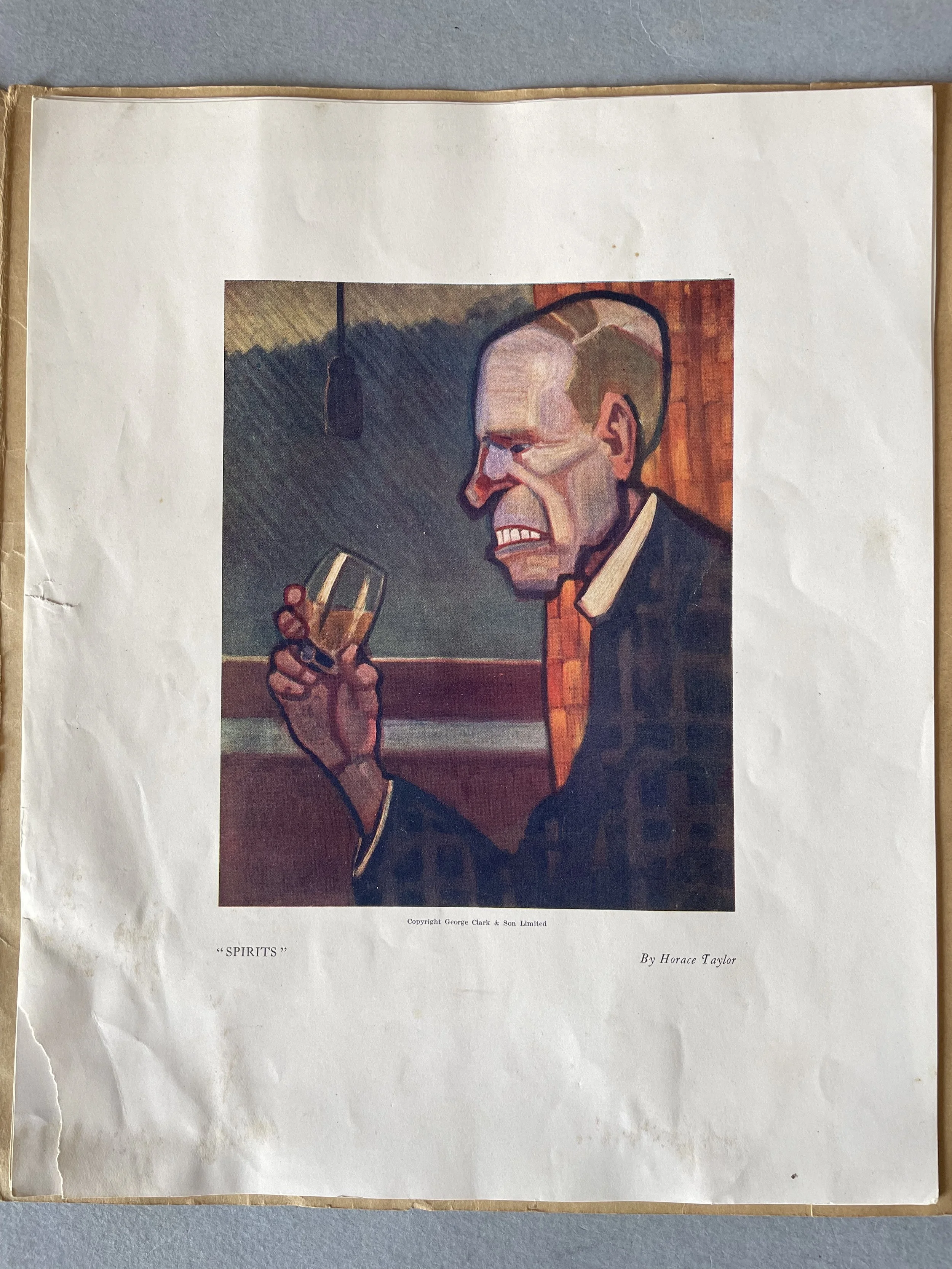
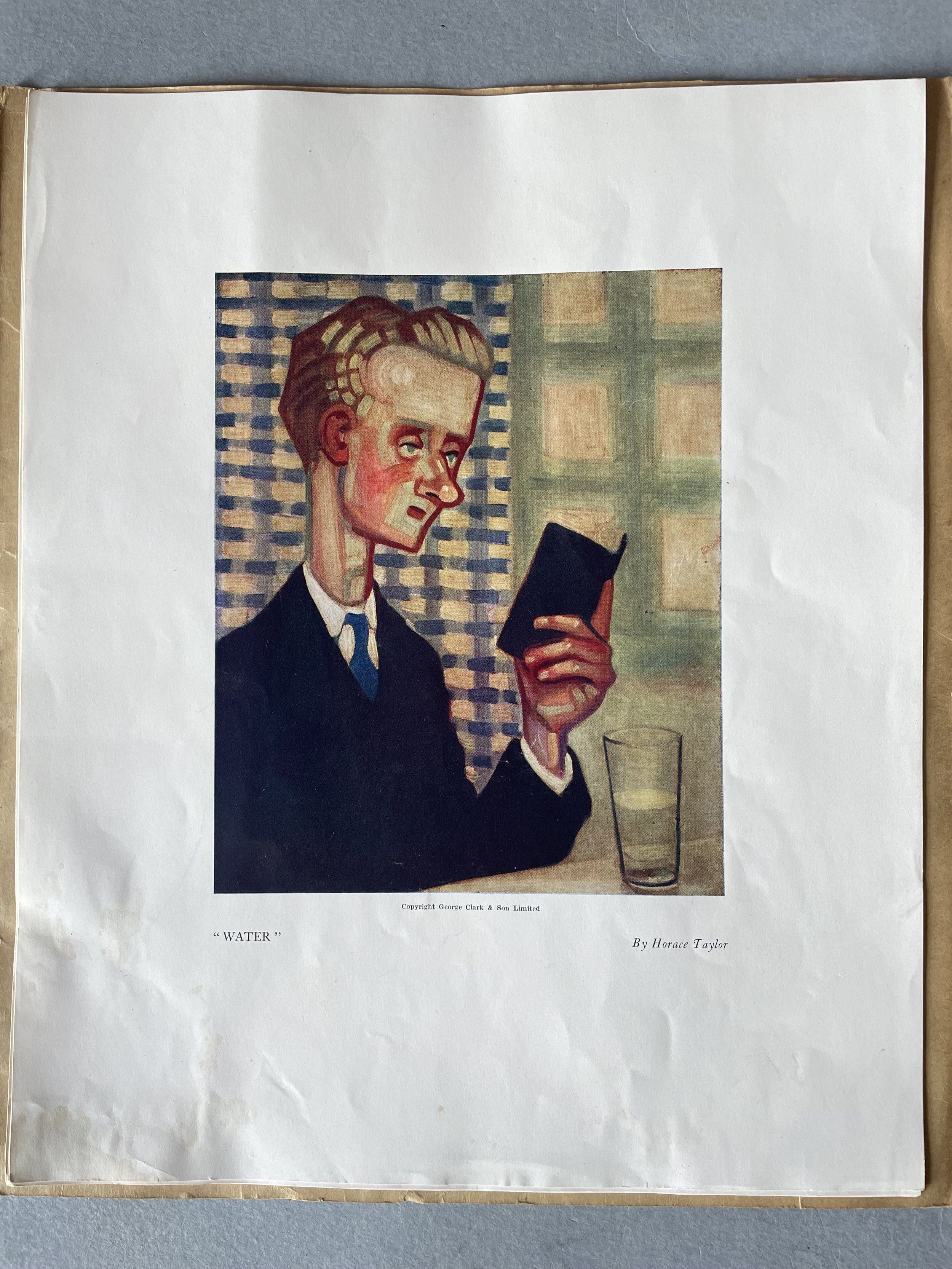
Scarce set of 5 prints by the commercial artist, Horace Taylor (1881-1934), housed in the original folder. Horace Taylor started out as a cartoonist for the Manchester Guardian, before making his name as a poster designer in the 1920’s, most famously working on posters for the London Underground. The publisher, George Clark & Son were suppliers of sugars to the brewing industry. Clark started out as a greengrocer in Westminster, before expanding into sugars and taking on industrial premises in Millwall Docks. The company was aquired by Brown & Paulson in 1956. The Millwall Docks works were bought by Tate & Lyle in 1964.
Some staining, marking and creasing to the folder. All of the prints slightly damp affected to the bottom margin, one with loss to the corner and a nick to one edge.
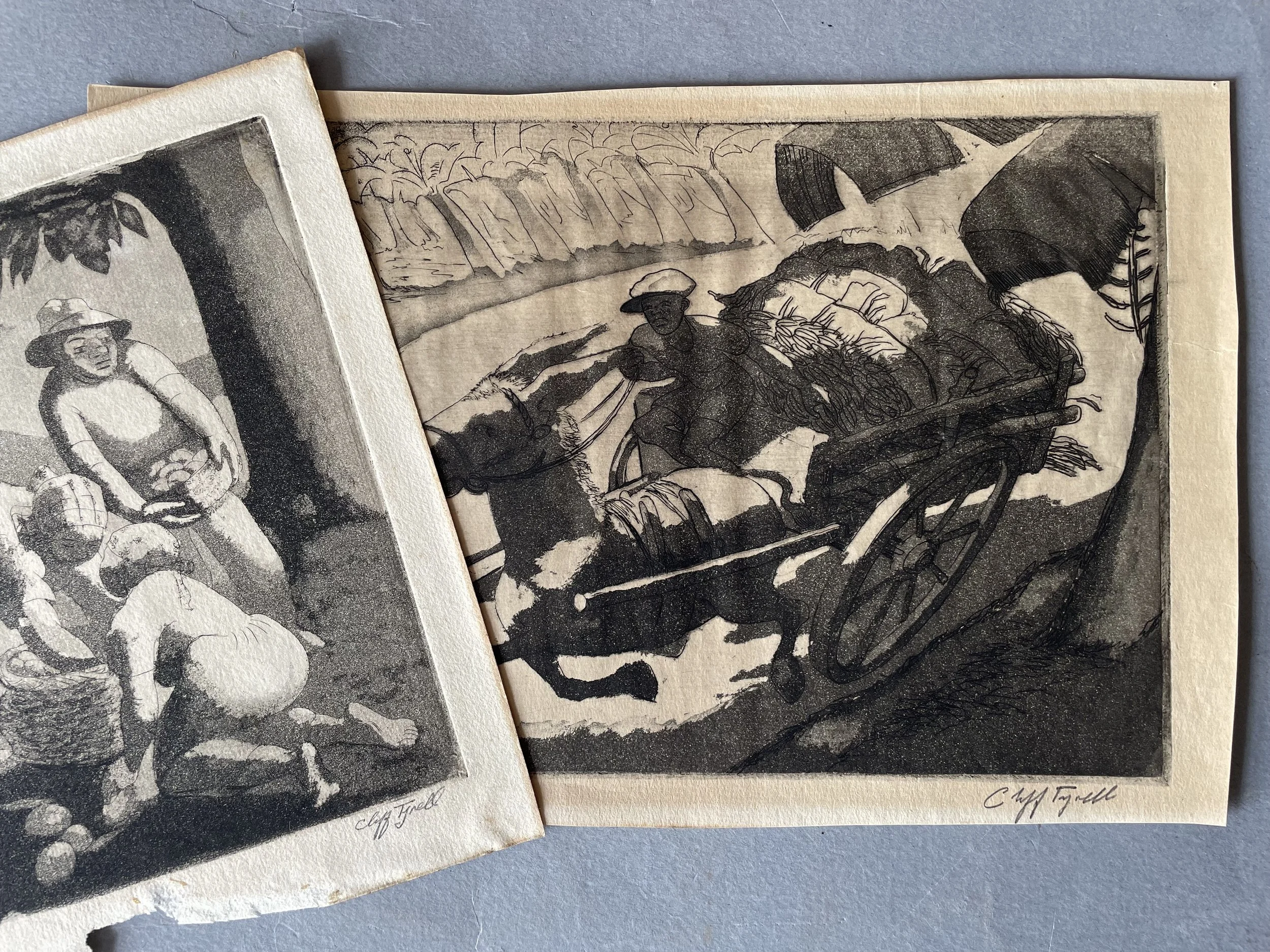
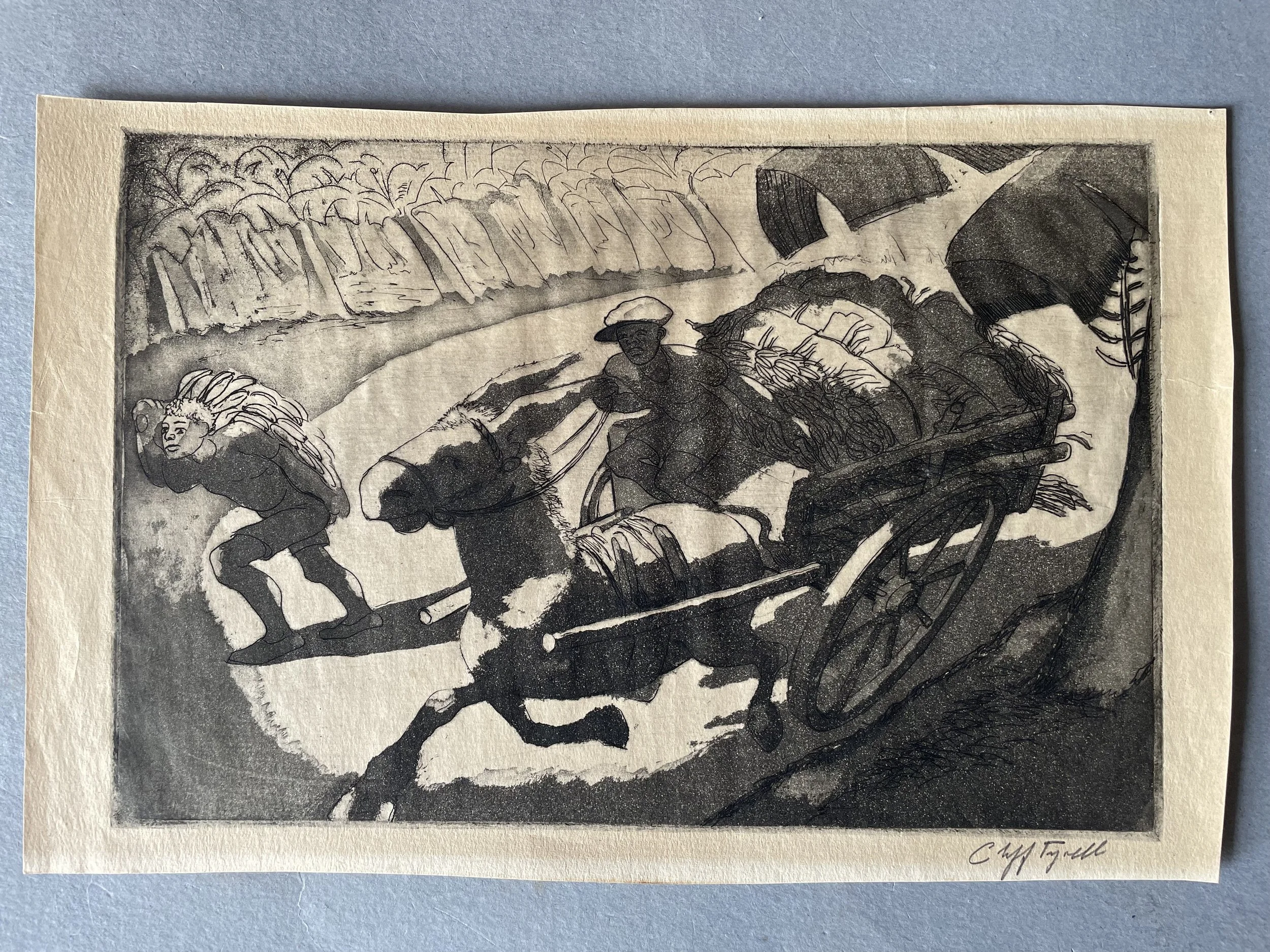
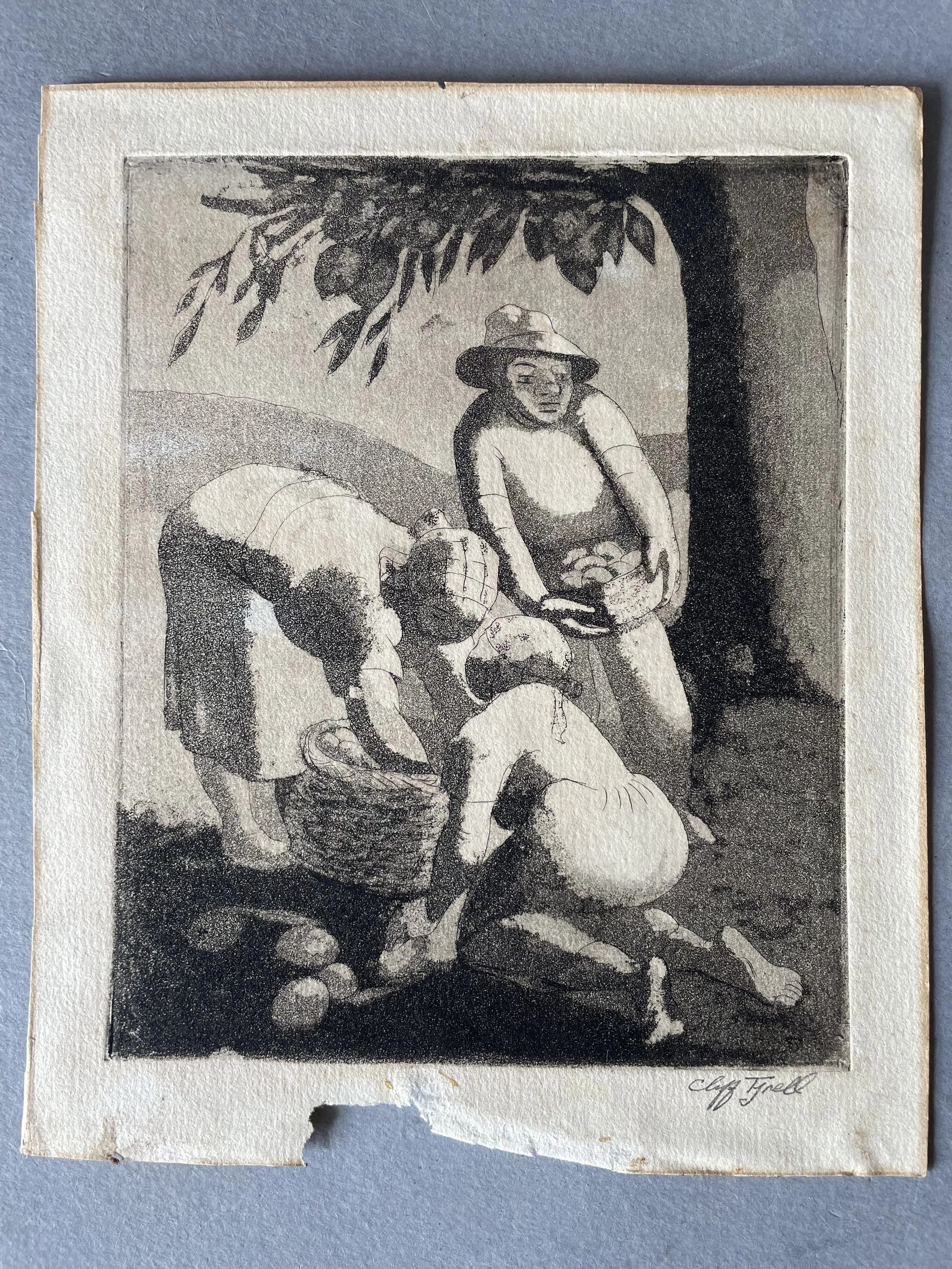
Two etchings by the Jamaican born artist, Cliff Tyrell (1906-1994). 222 × 148mm and 156 × 126mm, plus margins. Tyrell was a cartoonist on Jamaican newspapers before moving to London in 1937 to study at the Central School of Arts and Crafts. His work was shown at several prominent London galleries, but he never achieved wider success and later in life moved to Cornwall. Both of these etchings are held by the Victoria and Albert Museum, London. Some tanning to the paper. One with damage to the bottom margin.
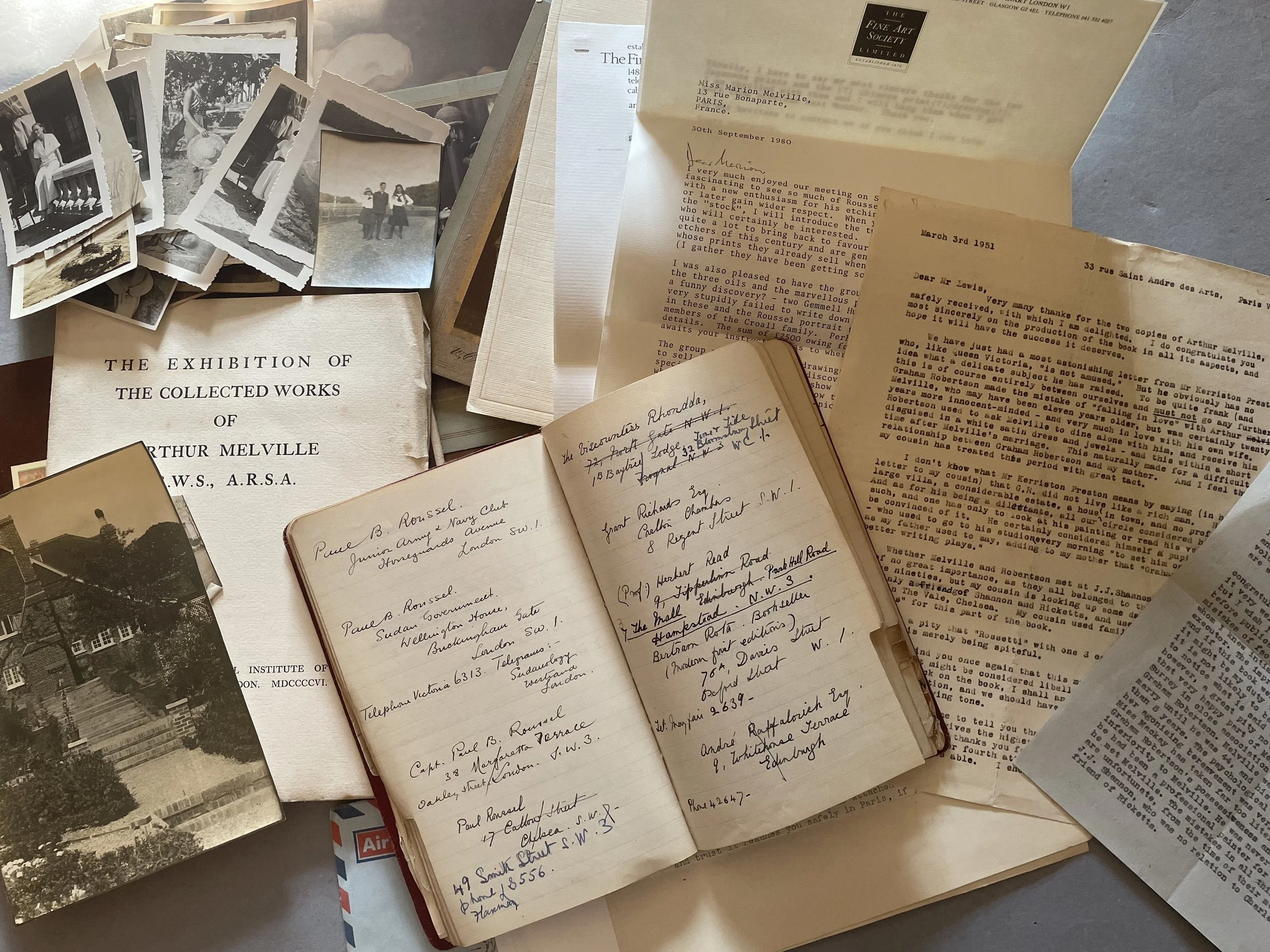
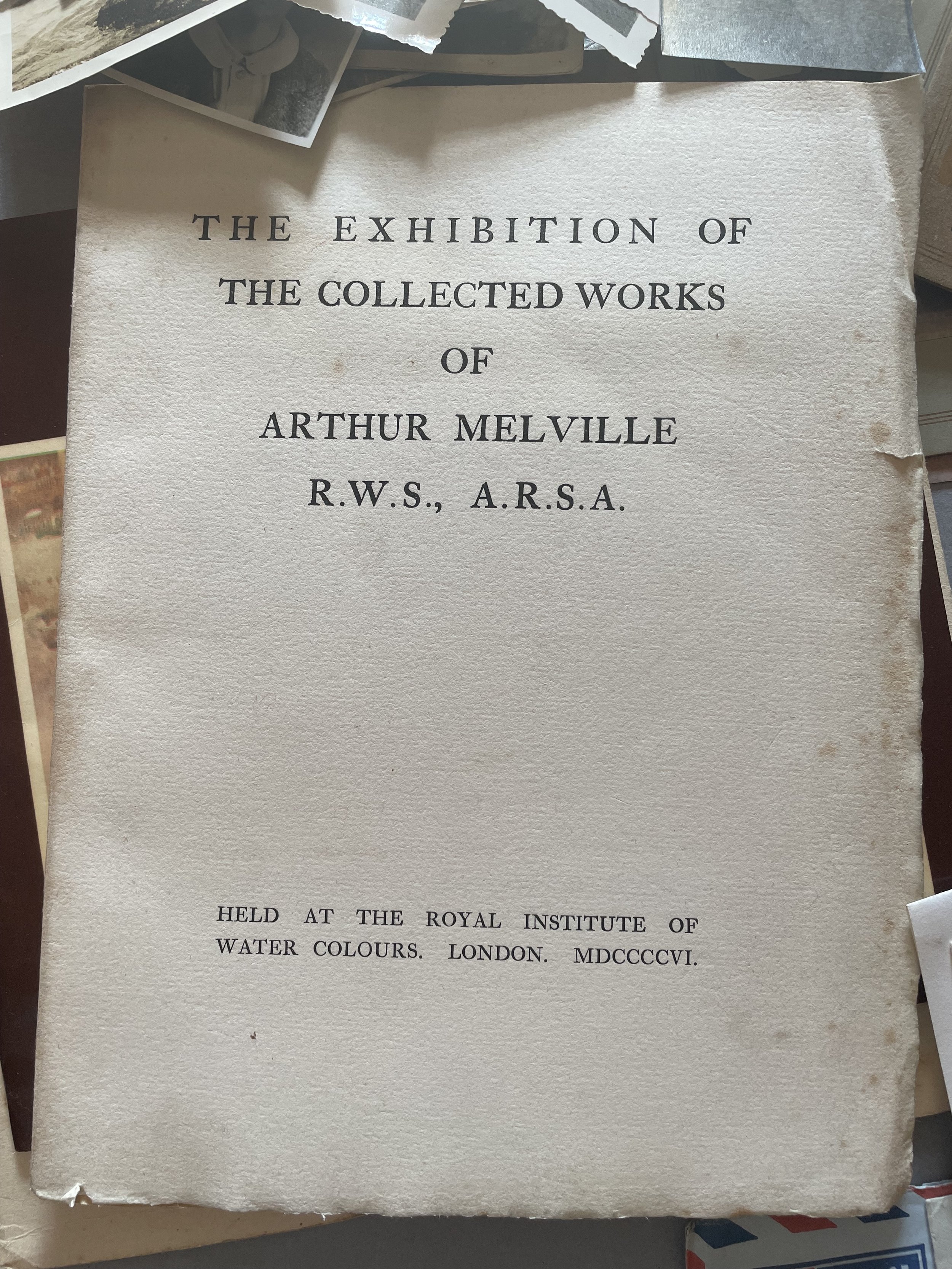
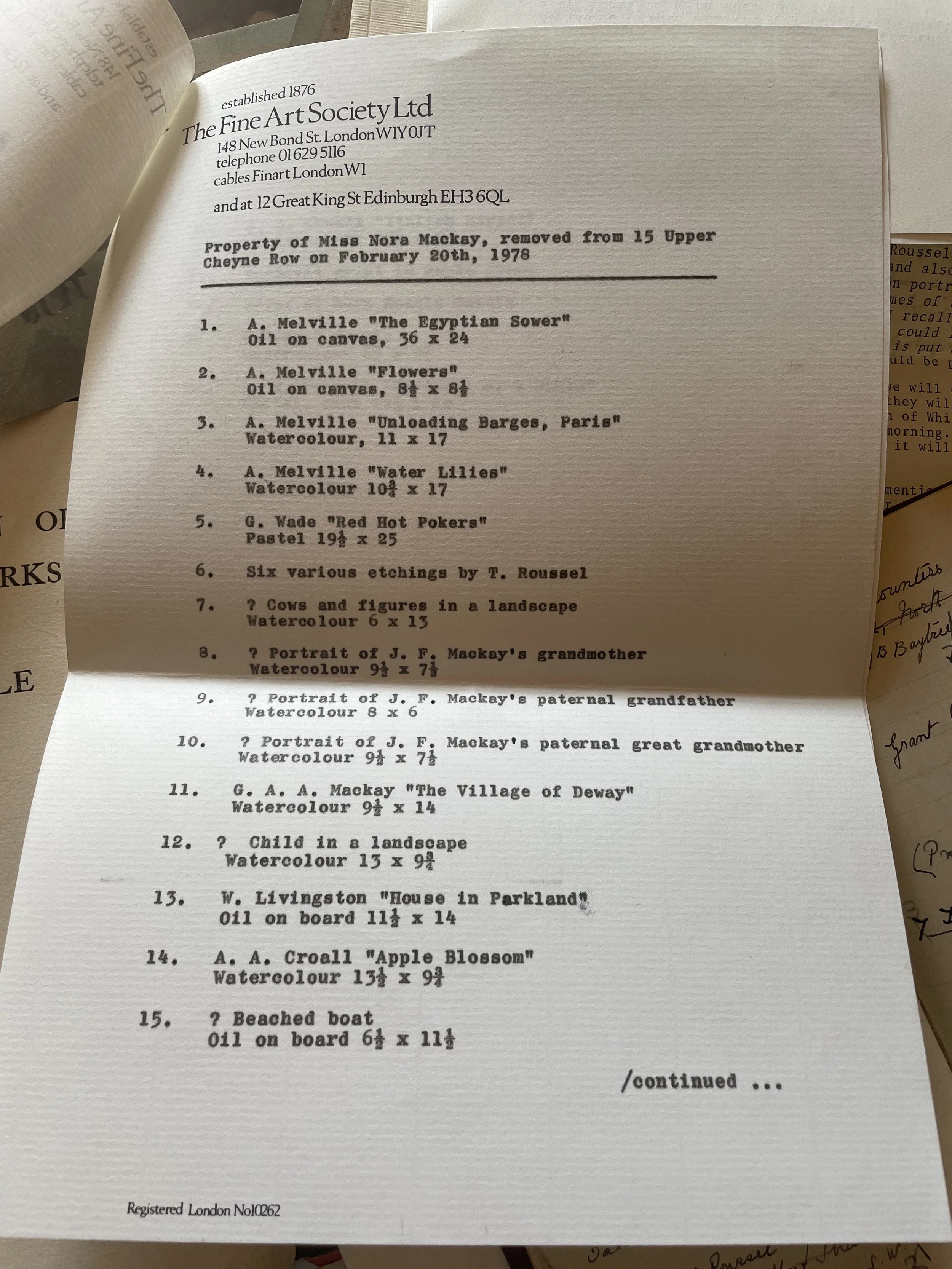
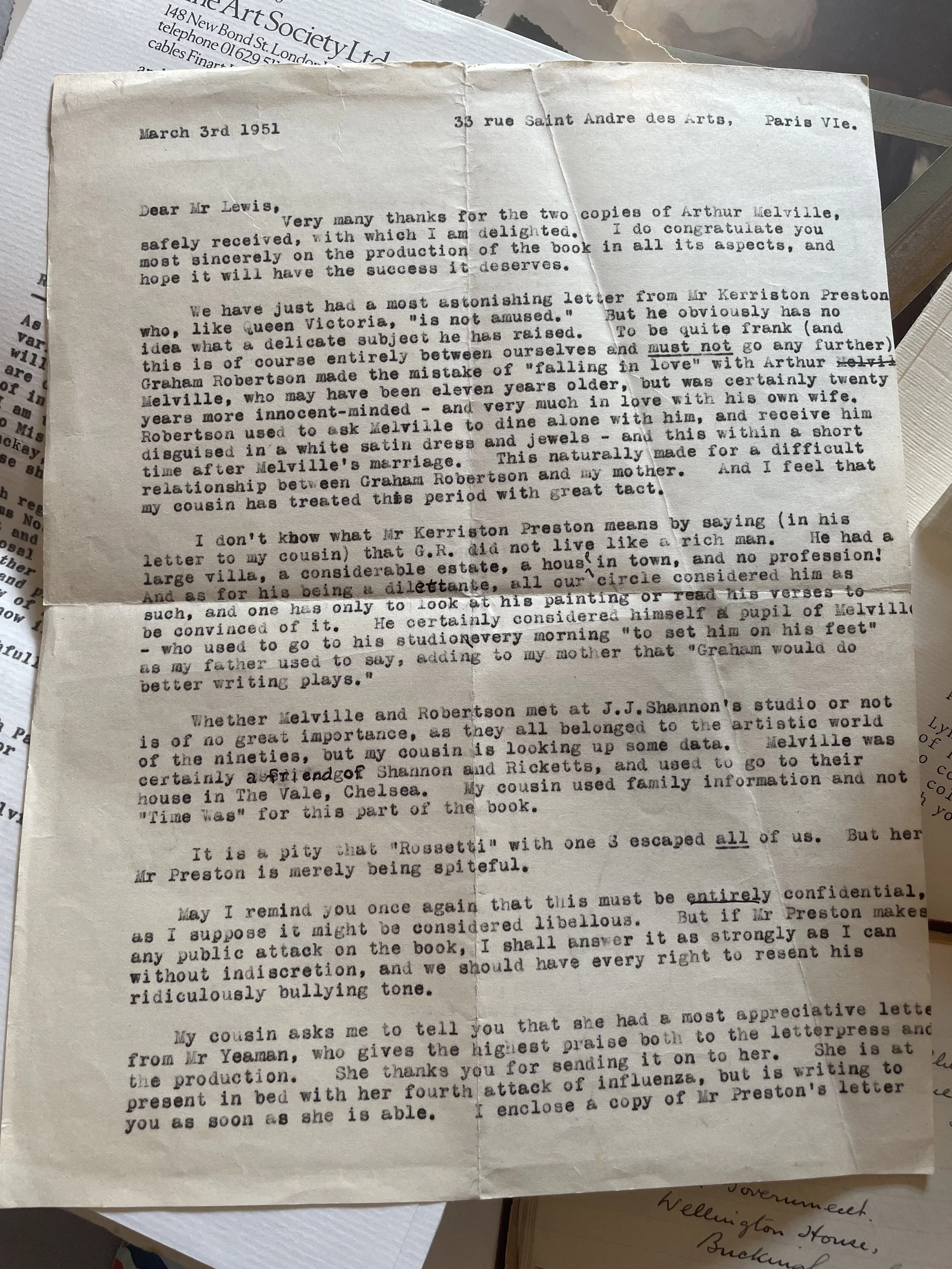
An archive of letters, photographs, catalogues and address book, from the estates of Marion Melville (1903-1984) and Agnes Ethel Mackay (1889-1980). Marion Mackay was the daughter of Scottish artist, Arthur Melville (1855-1904) and Ethel Melville nee Croall (1872-1917). When Melville died at the age of 49, Ethel Melville married the artist, Theodore Roussell (1847-1926), with Roussell adopting Marion Melville and taking her cousin for good measure, who later became his studio assistant. When Roussell died, Marion and Ethel left for Paris and St Tropez, Marion going on to write on the Knights Templars and Agnes to write poetry, fiction and a biography of Arthur Melville. Melville had been a close friend of the artist, W Graham Robertson (1866-1948), and after his death his daughter, Marion become a muse to Robertson who created a book for her. Included in this archive are a pair of copy letters referencing Robertson unorthodox affections towards Melville. Also included are Melville and Mackay’s address book, highlighting relationships with a number of interesting figures including Ethel Smyth, Edith Sitwell, Philippa Strachey, Ethel Walker, Siegfried Sassoon, Leonard Woolf, Duncan Grant, John Duncan Ferguson and[Marc] Andre Raffalovich. The correspondence is largely with members of the Roussell family and other friends, though there are several pertaining to paintings left by Arthur Melville. The photographs are mainly family photographs, including a number of Marion Melville and Agnes Mackay in St Tropez in the 1930’s.
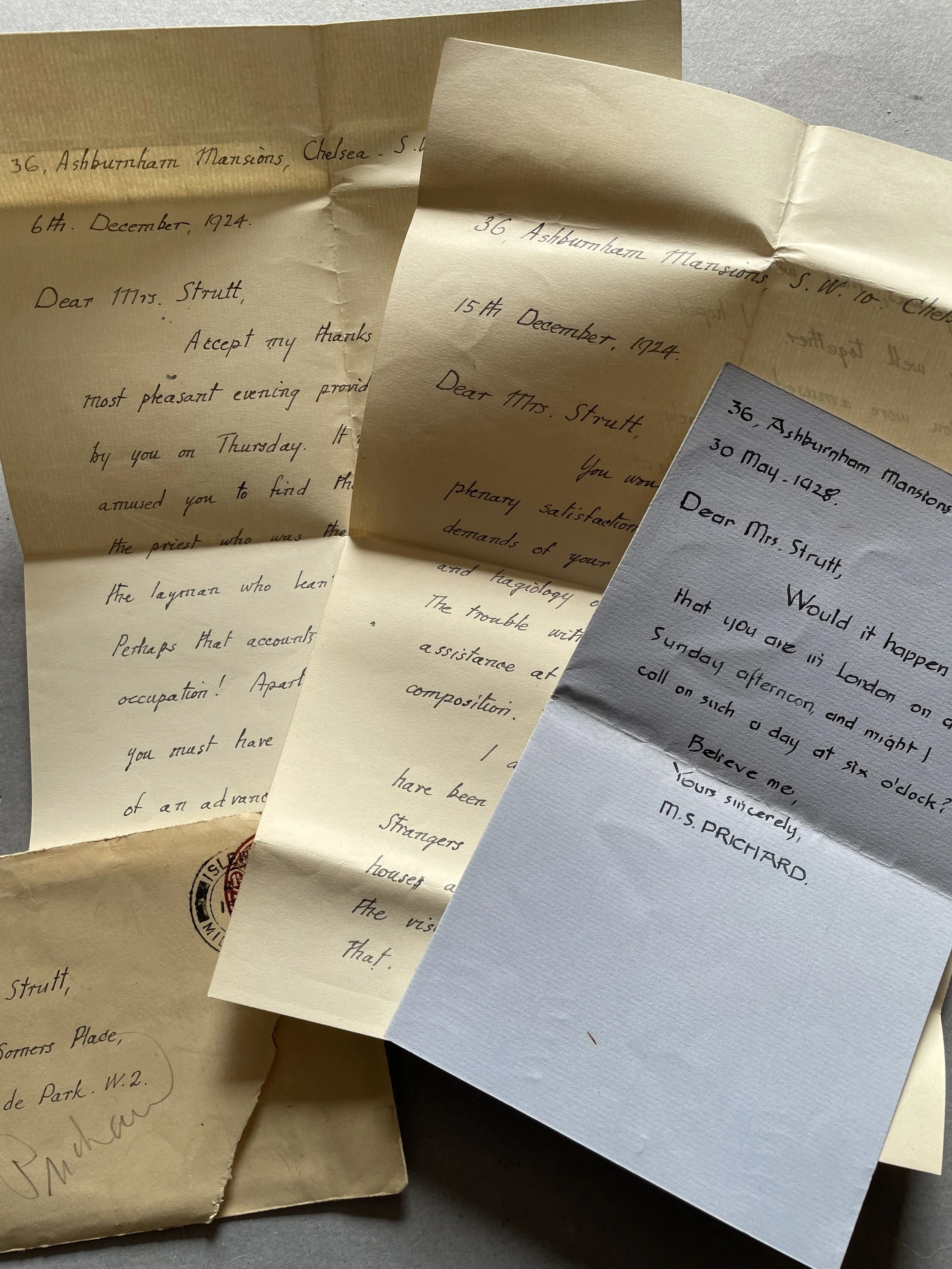
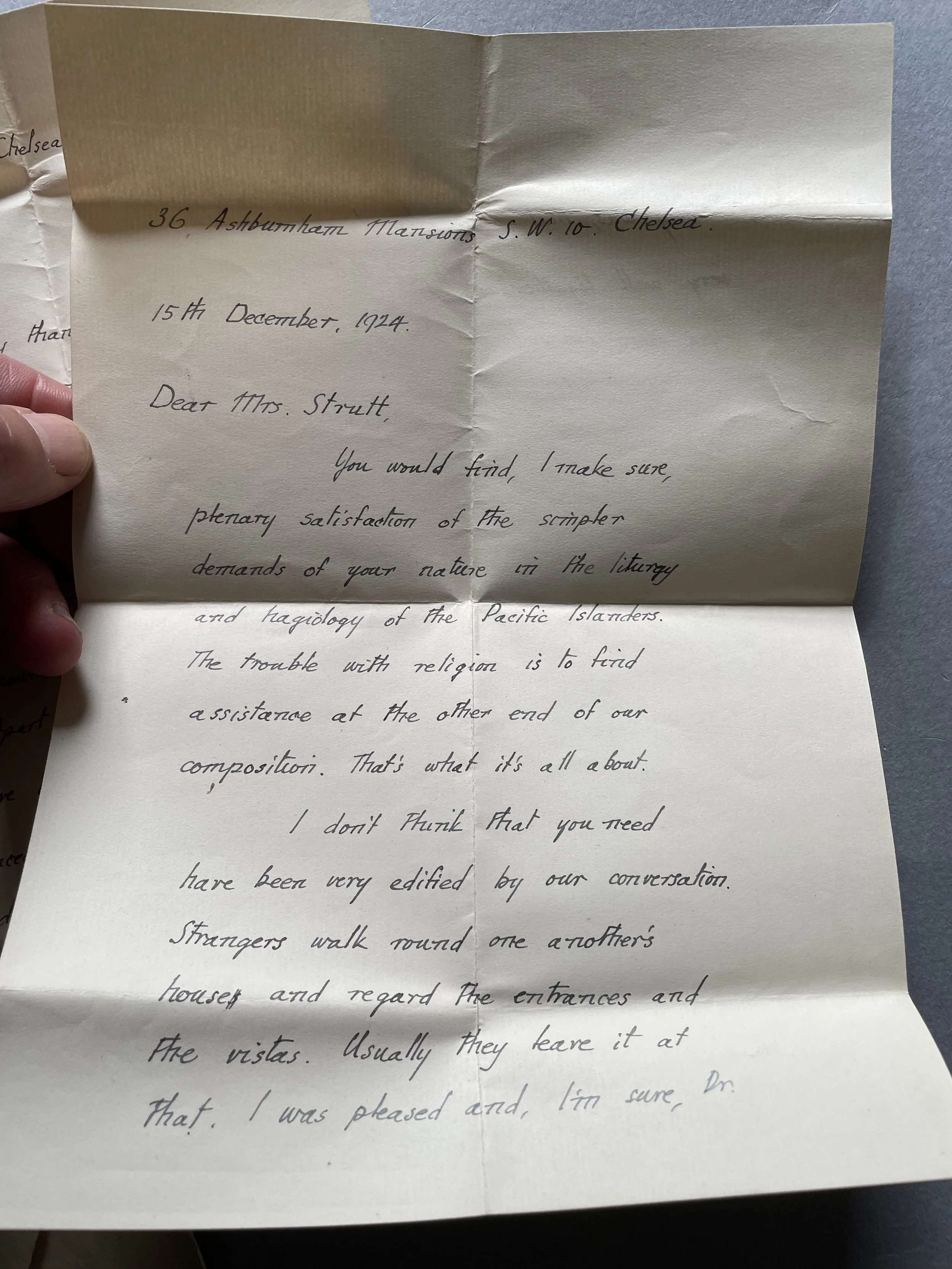
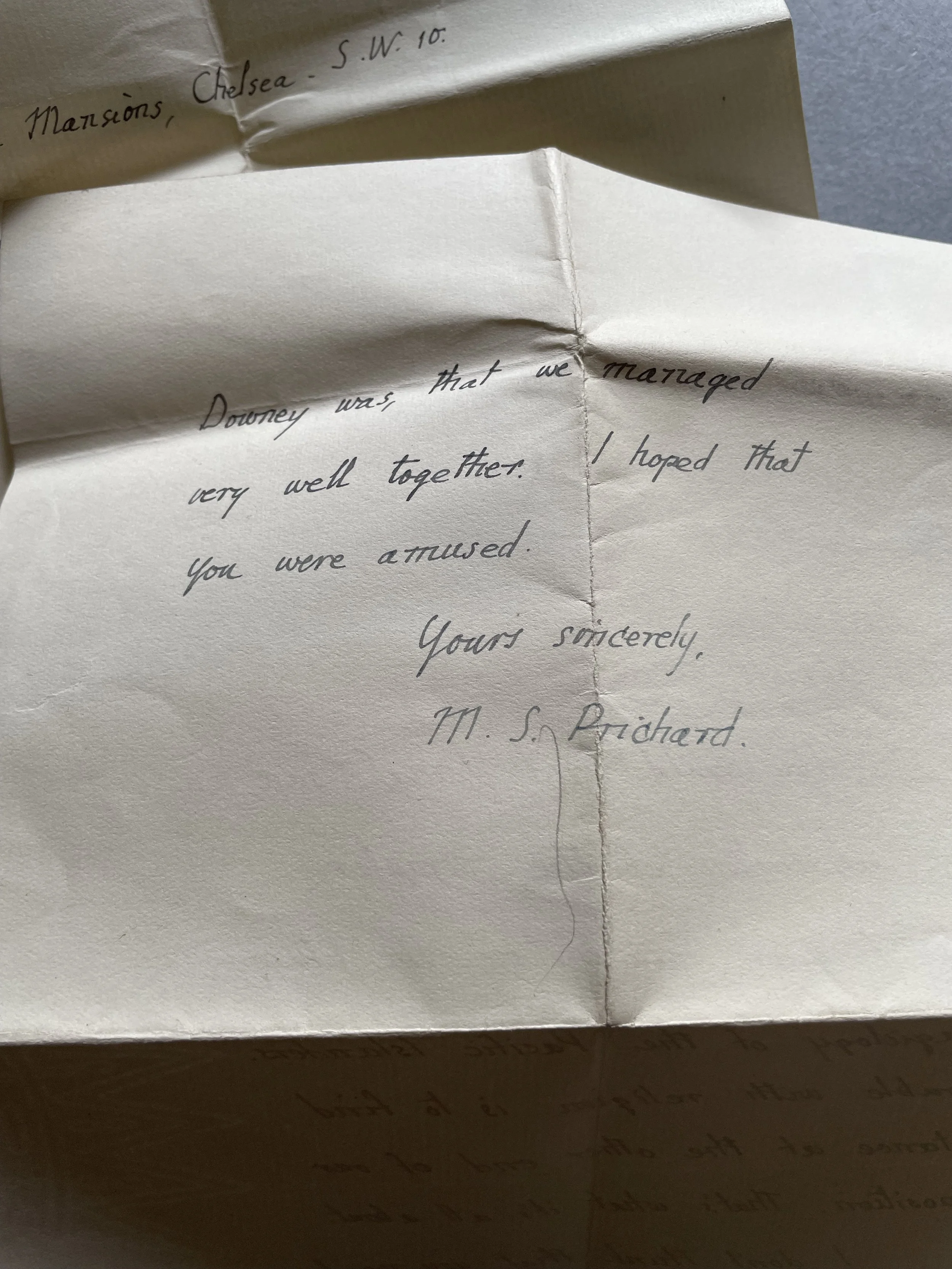
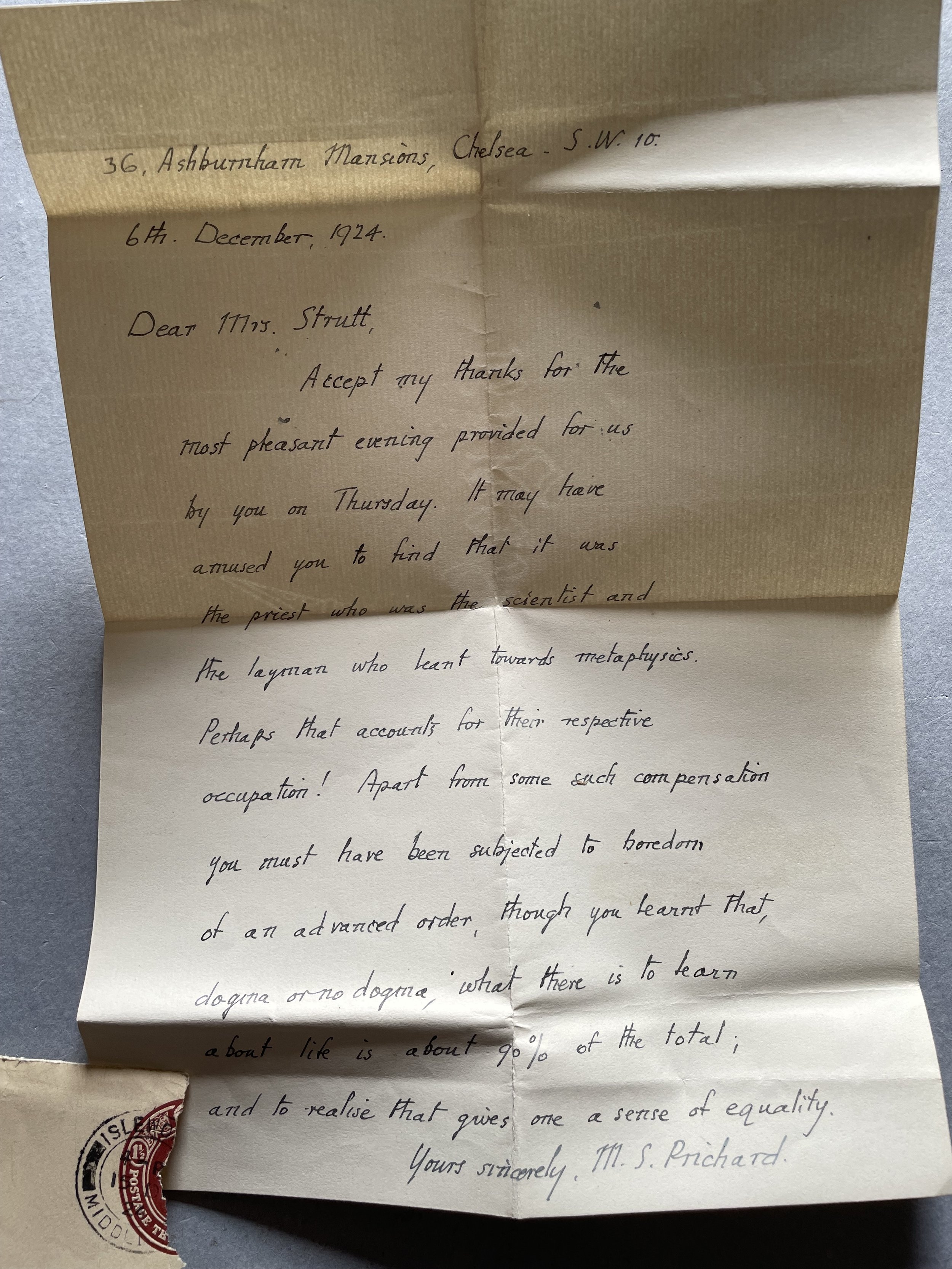
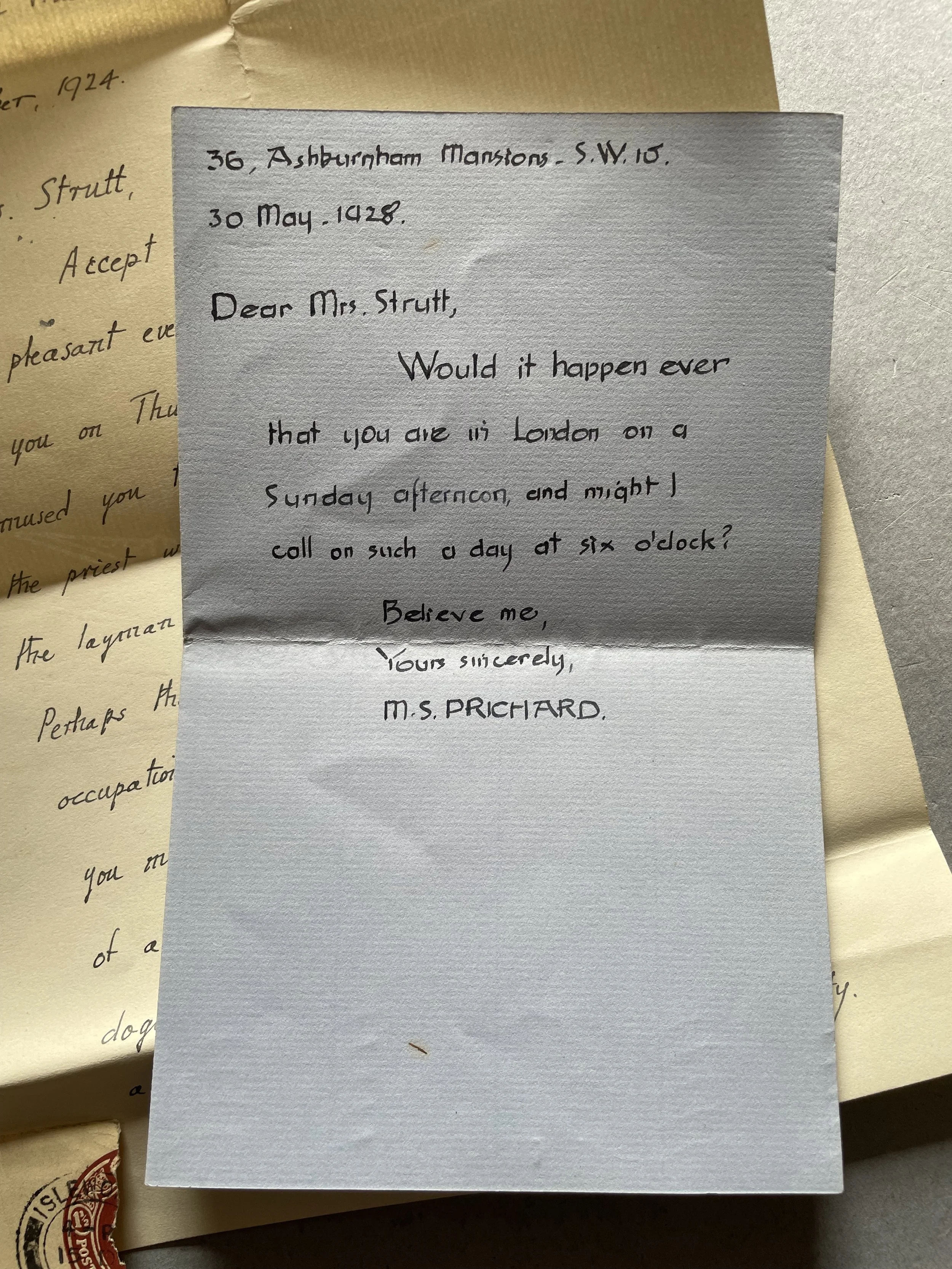
Two short, signed, but interesting letters and one signed note from the art critic, Matthew Stewart Prichard (1865-1936), all three to Florence Strutt (1905-1969), wife of the soldier and mountaineer, Edward Lisle Strutt (1874-1948), the letters, 1924, the note, 1928.
'You would find, I make sure plenary satisfaction of the simpler demands of your nature in the liturgy and hagiology of the Pacific Islanders. The trouble with religion is to find assistance at the other end of our composition. That's what it's all about. I don’t think that you need have been very edified by our conversation. Strangers walk round one another's houses and regard the entrances and the vistas.'
'Accept my thanks for the most pleasant evening provided for us by you on Thursday. It may have amused you to find that it was the priest who was the scientist and the layman who leant towards metaphysics. Perhaps that accounts for their respective occupation!.'
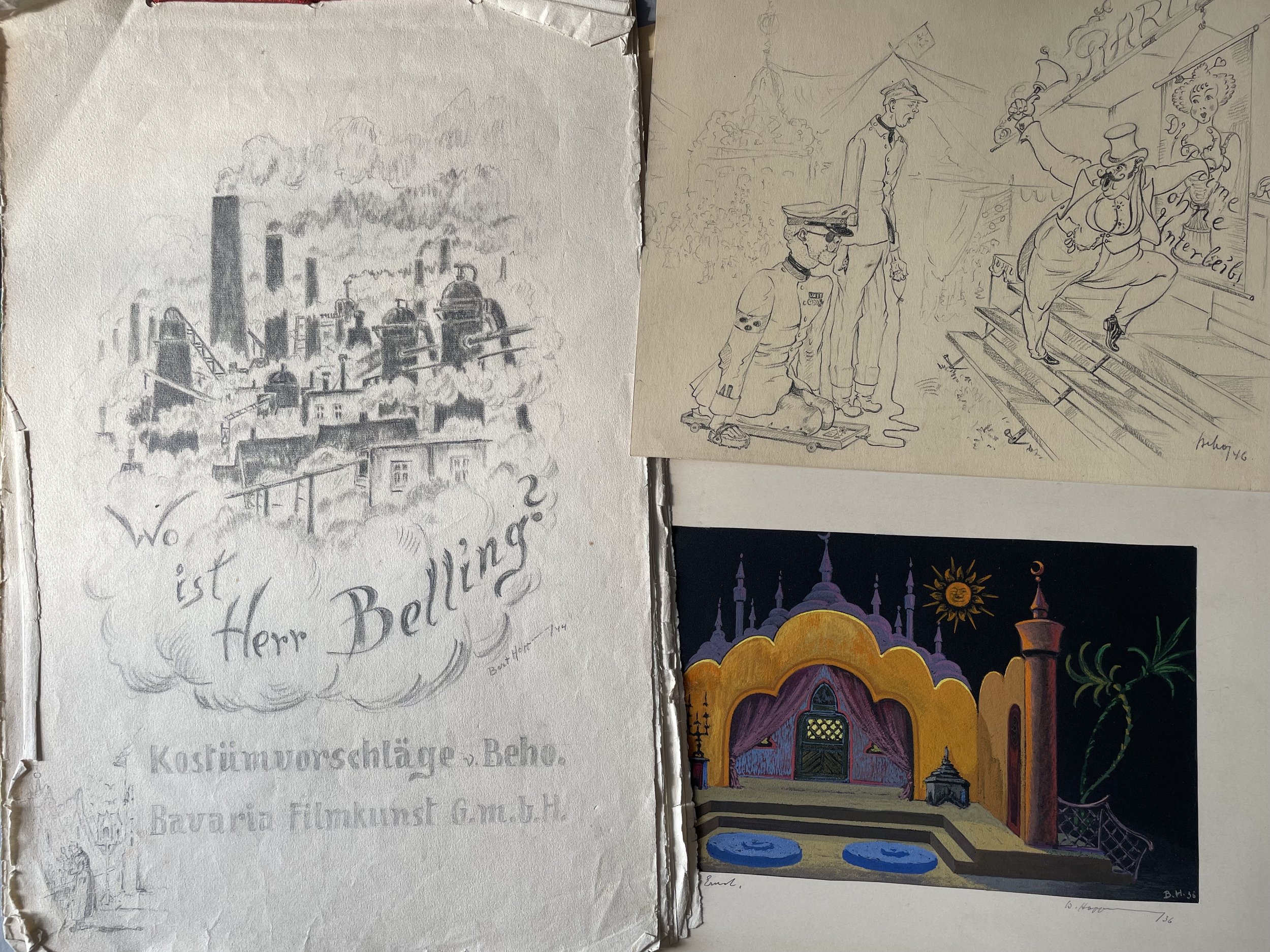
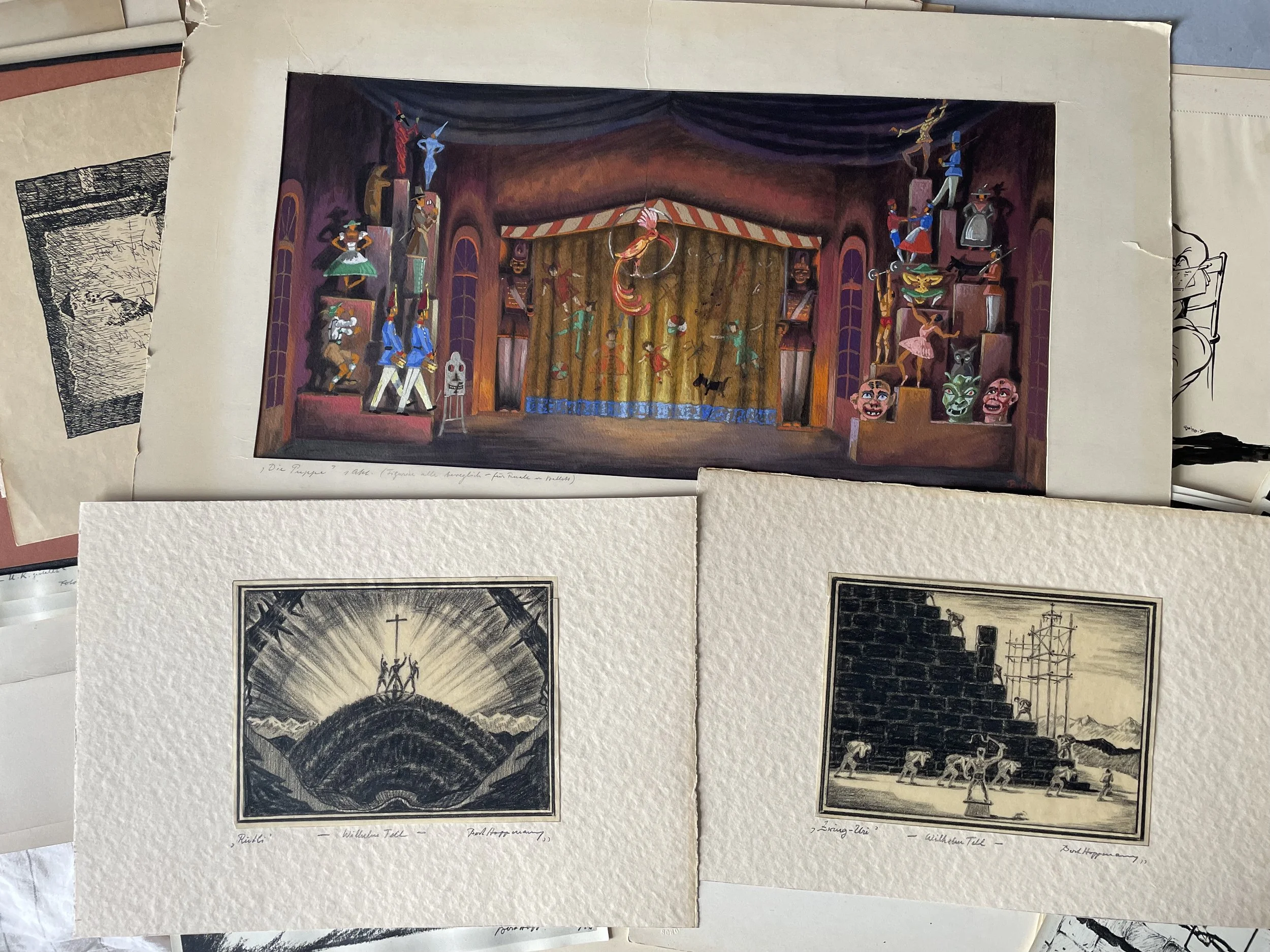
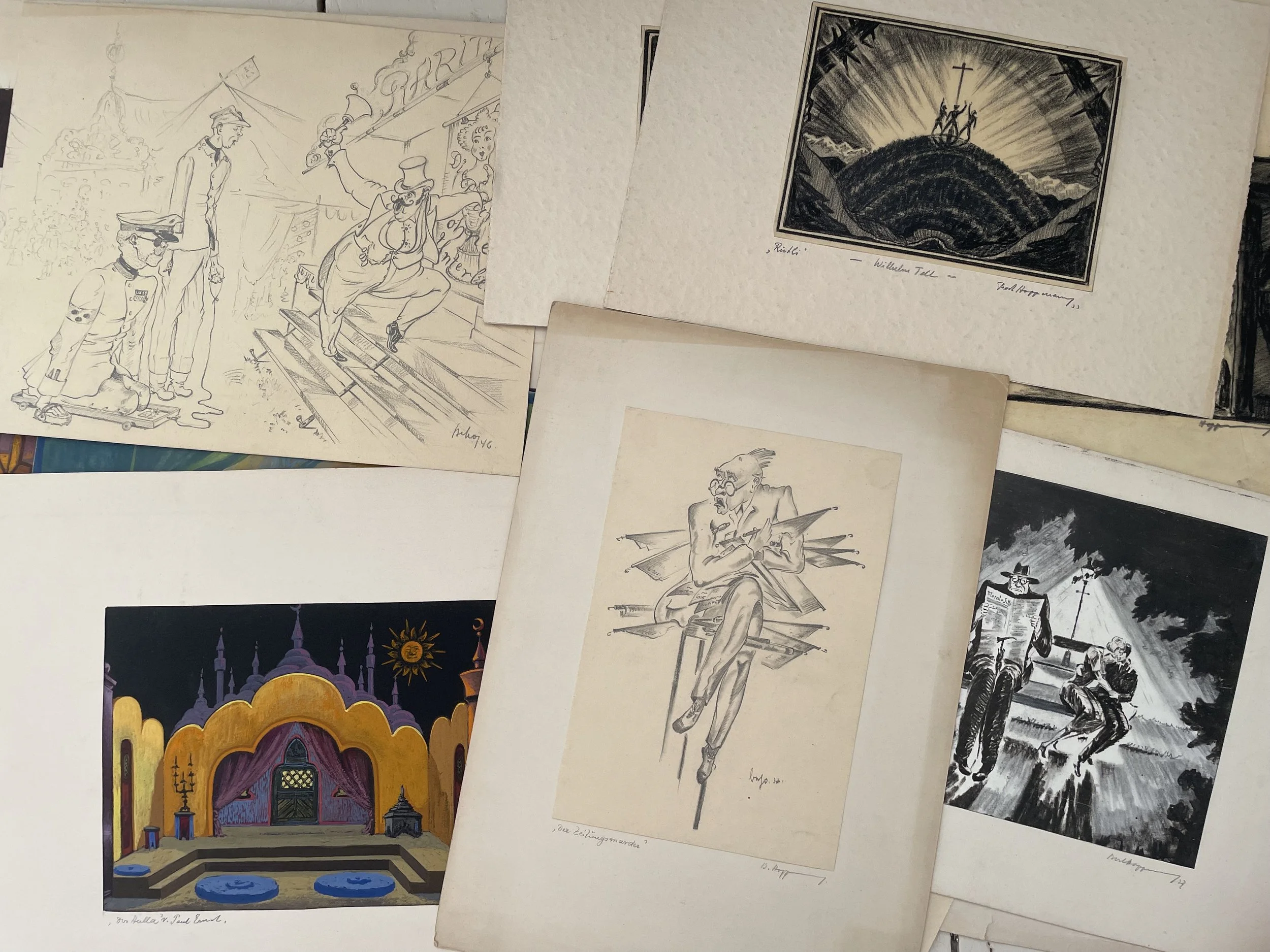
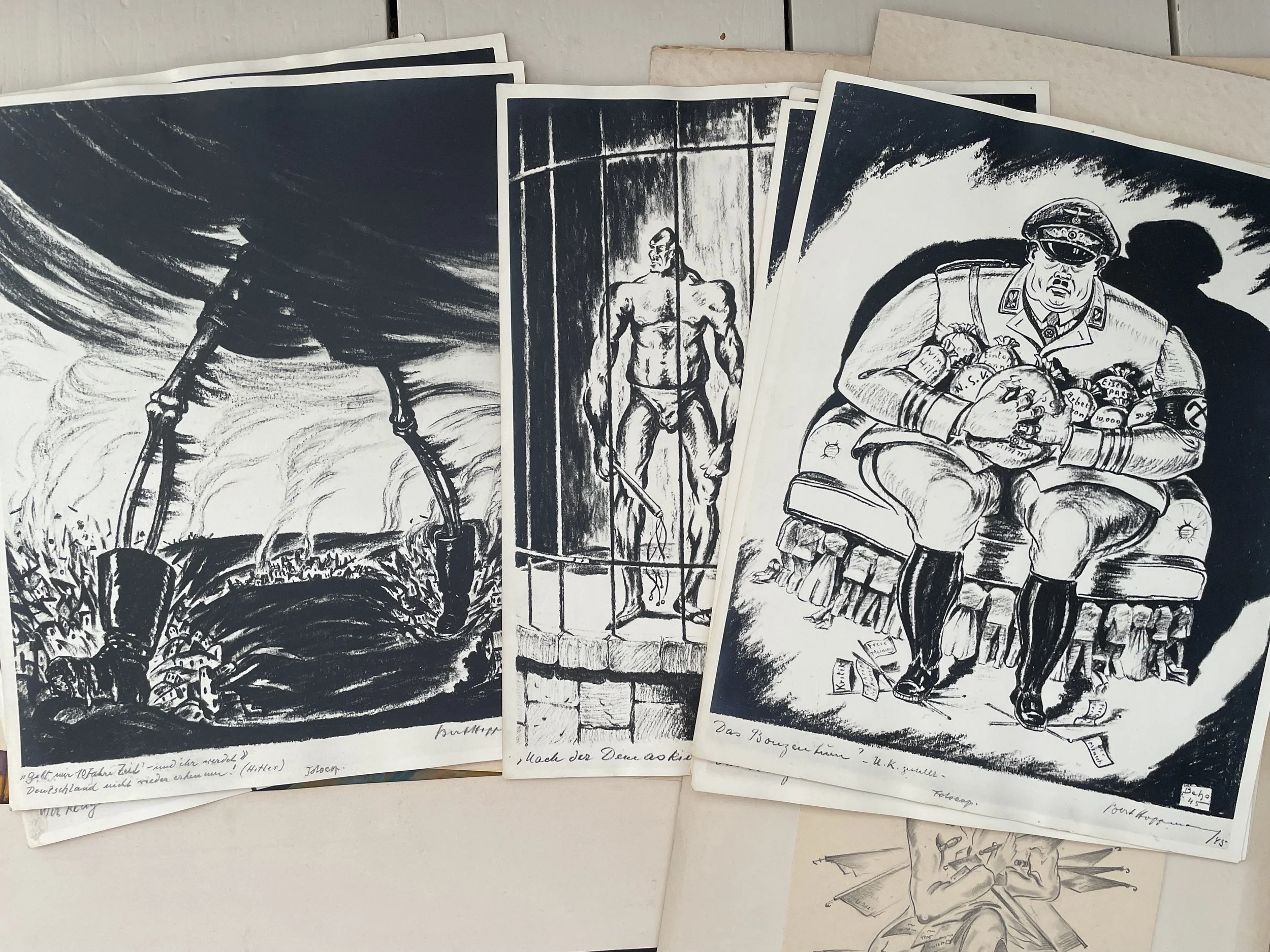
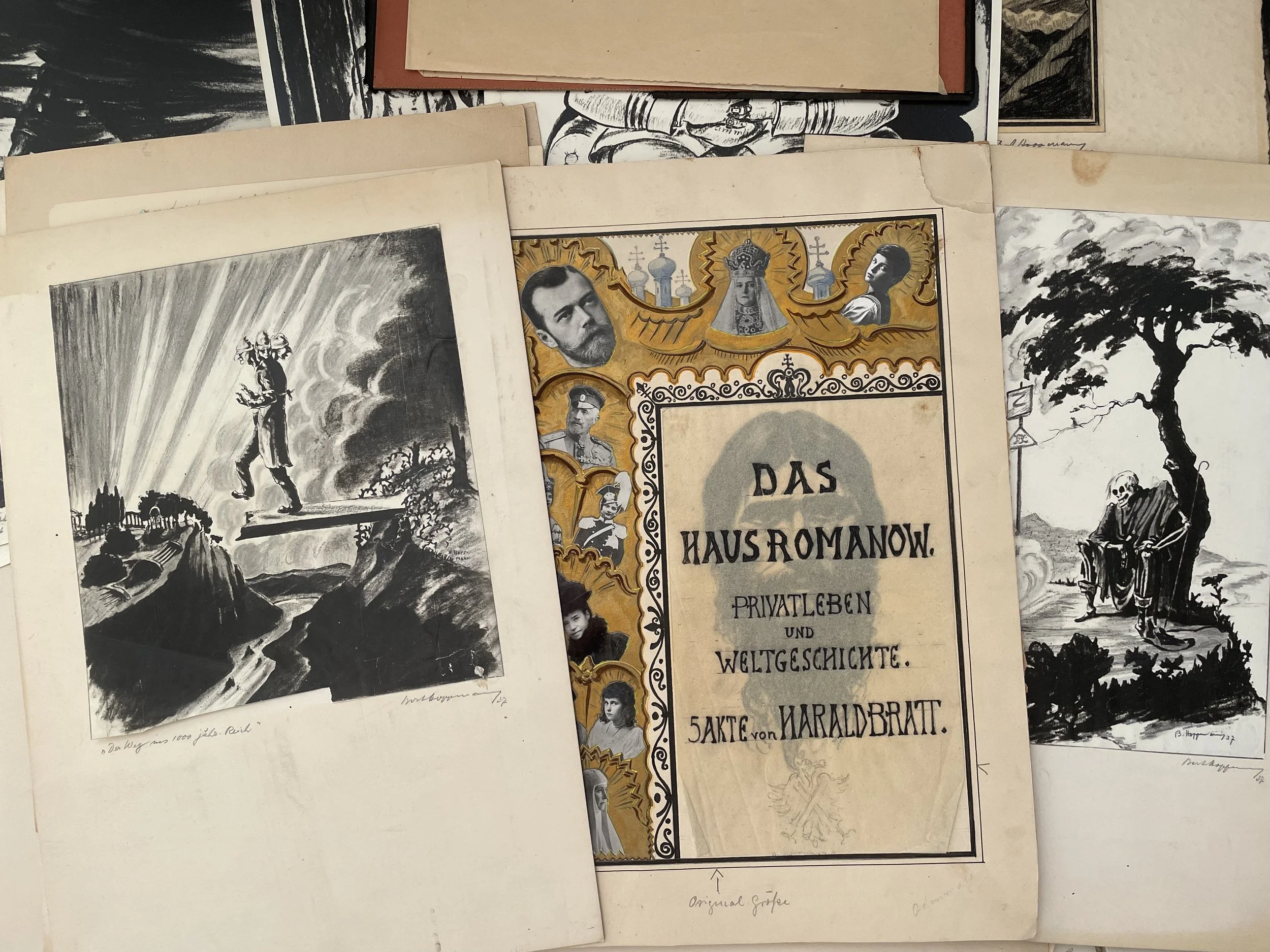
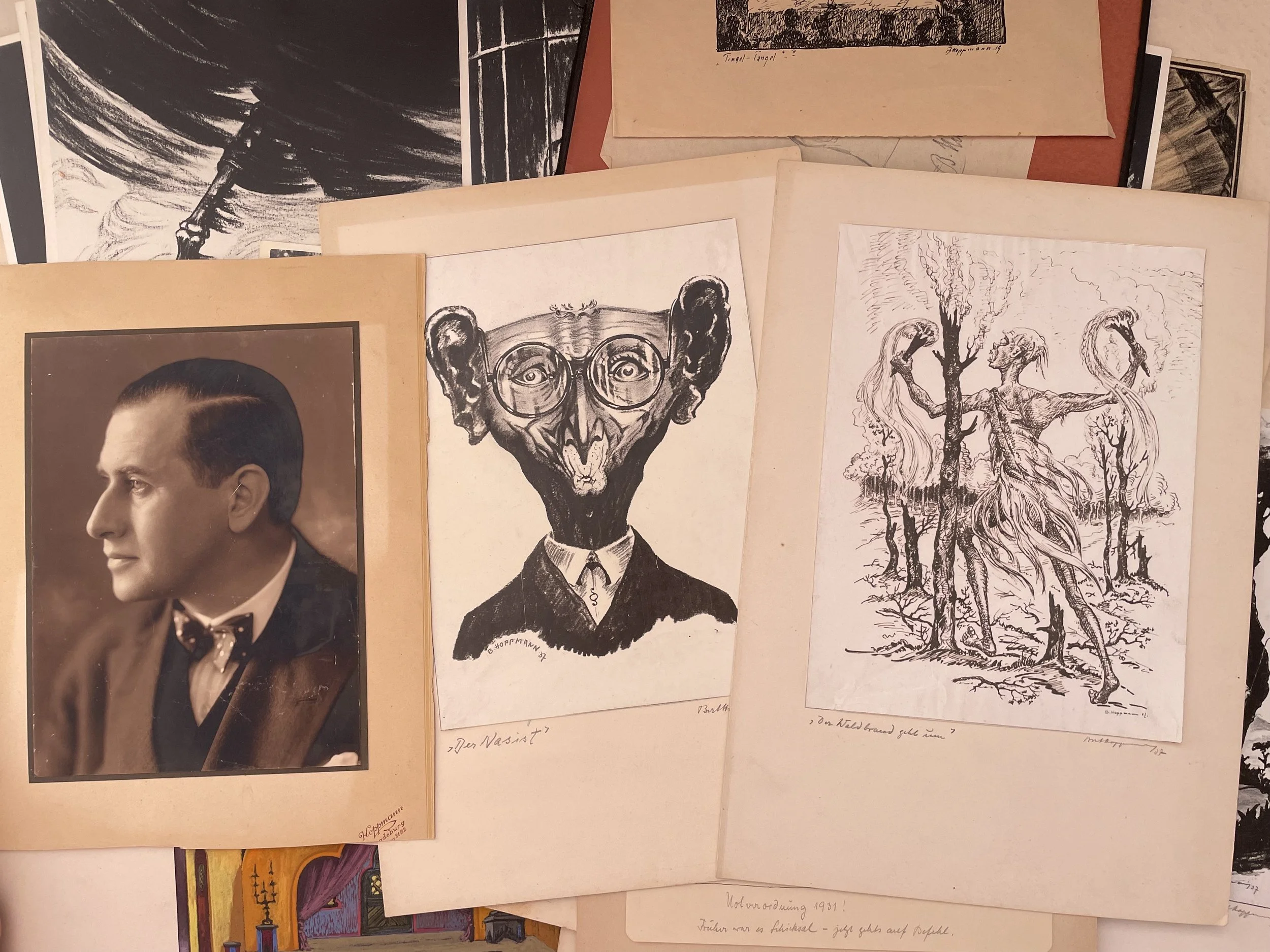
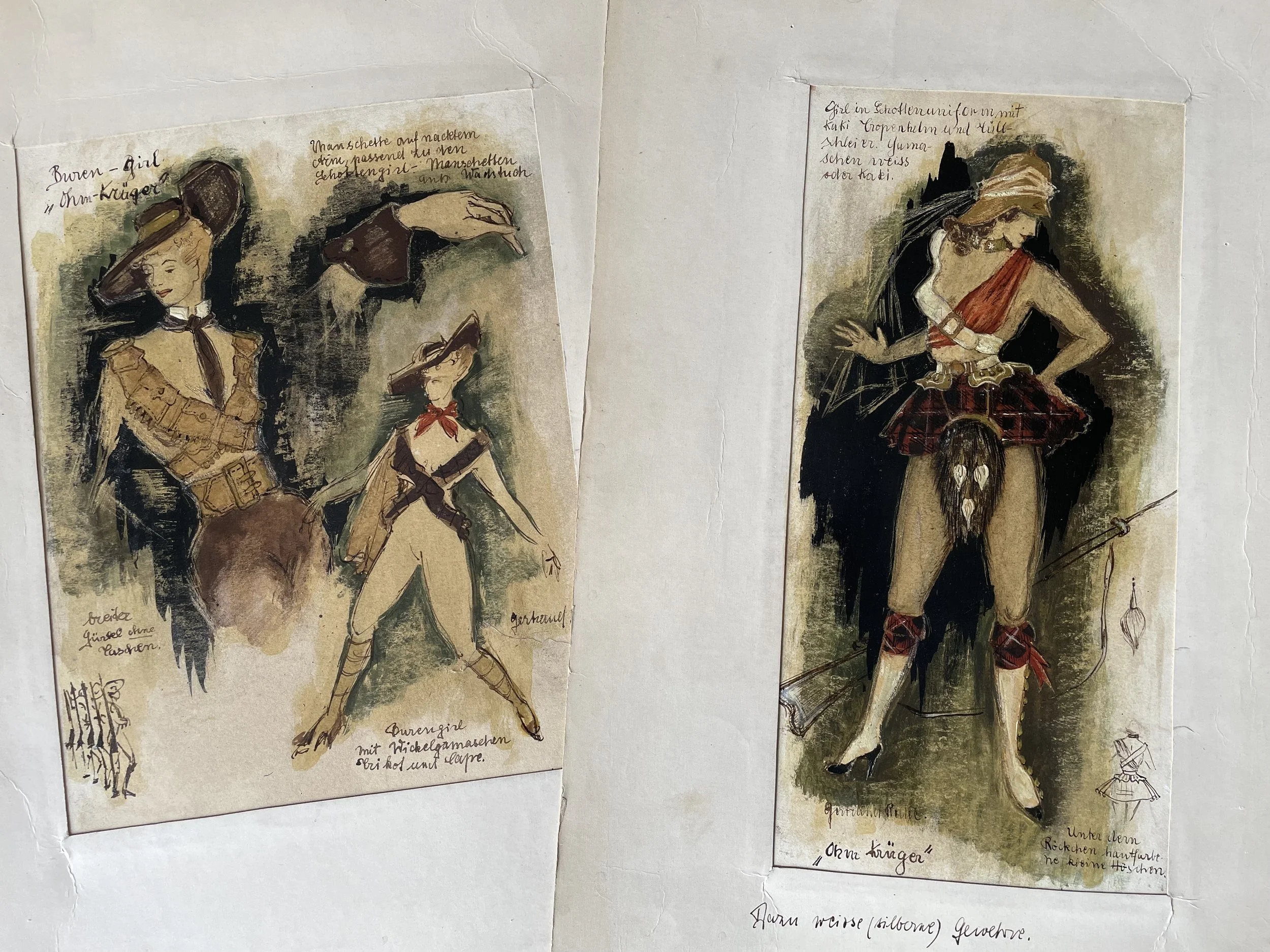
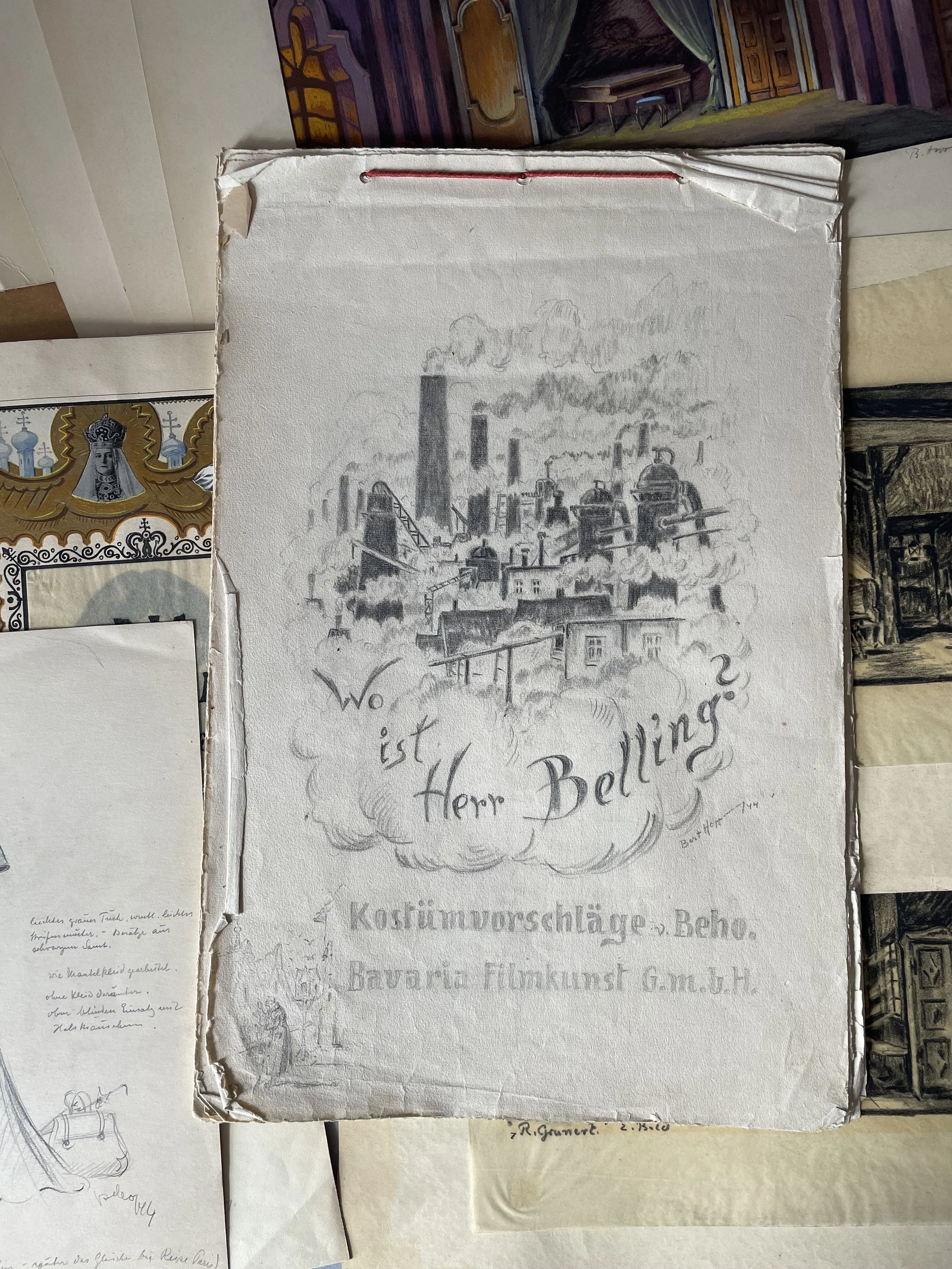
An archive of circa 60 drawings, lithographs and photographs by the German stage and costume designer, Bert Hoppmann (1889-1949). The collection includes 13 set designs, 22 costumes designs, including 19 in a string bound folio for the unfinished Emil Jannings film, Wo Ist Herr Belling; 9 photographs of politically charged expressionist works from 1945 and 6 similarly political lithographs backed on to card from 1937, plus several miscellaneous pieces. These pieces are dated from between 1920 and 1946 and most, save the photographs, are signed and dated in pencil.
Hoppmann worked as a stage designer for theatres in Braunschweig and Breslau in the 1920’s and early 1930’s, before moving to Berlin, where worked as a costume designer on. at least 15 films between 1938 and 1948.
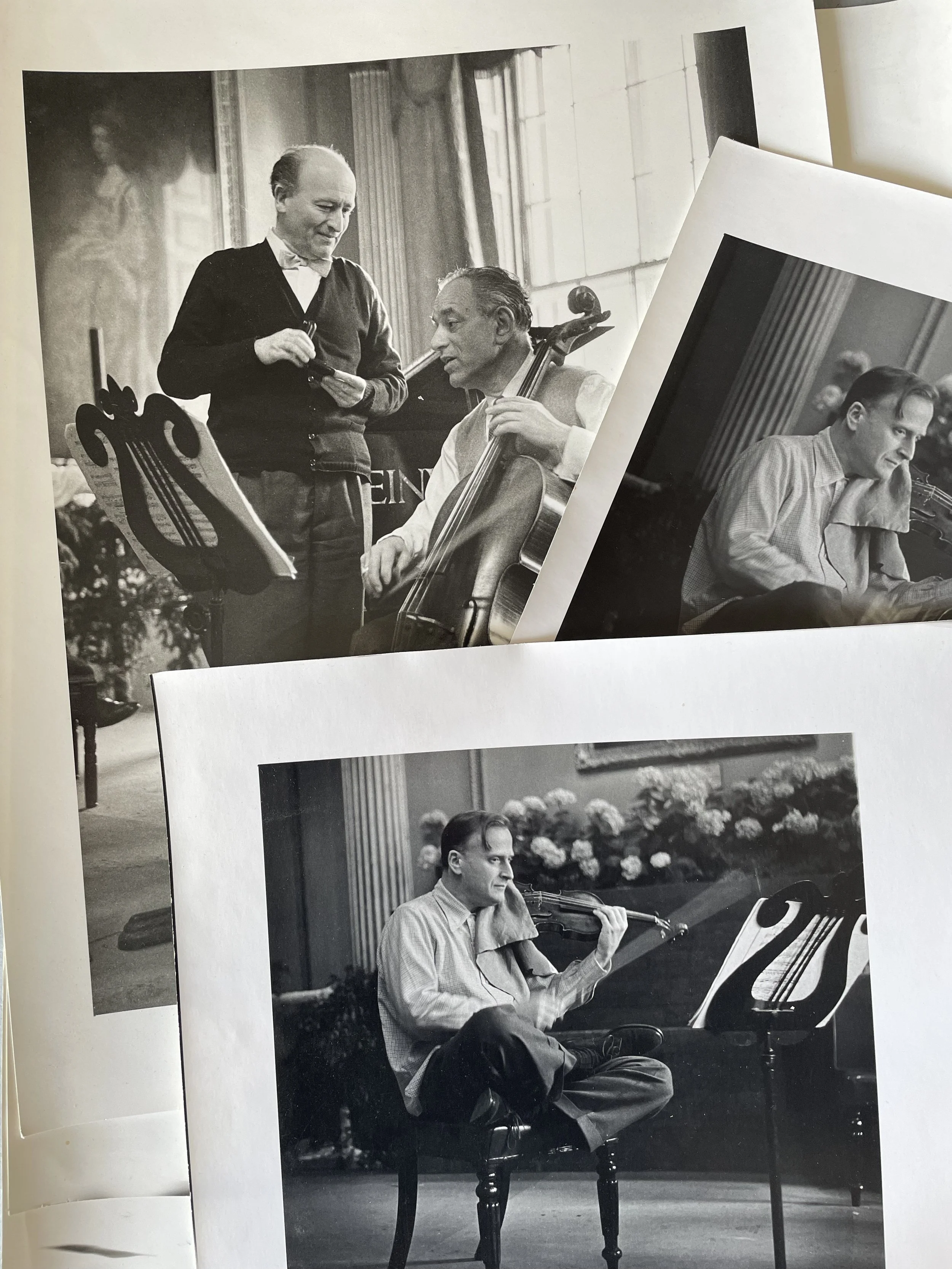
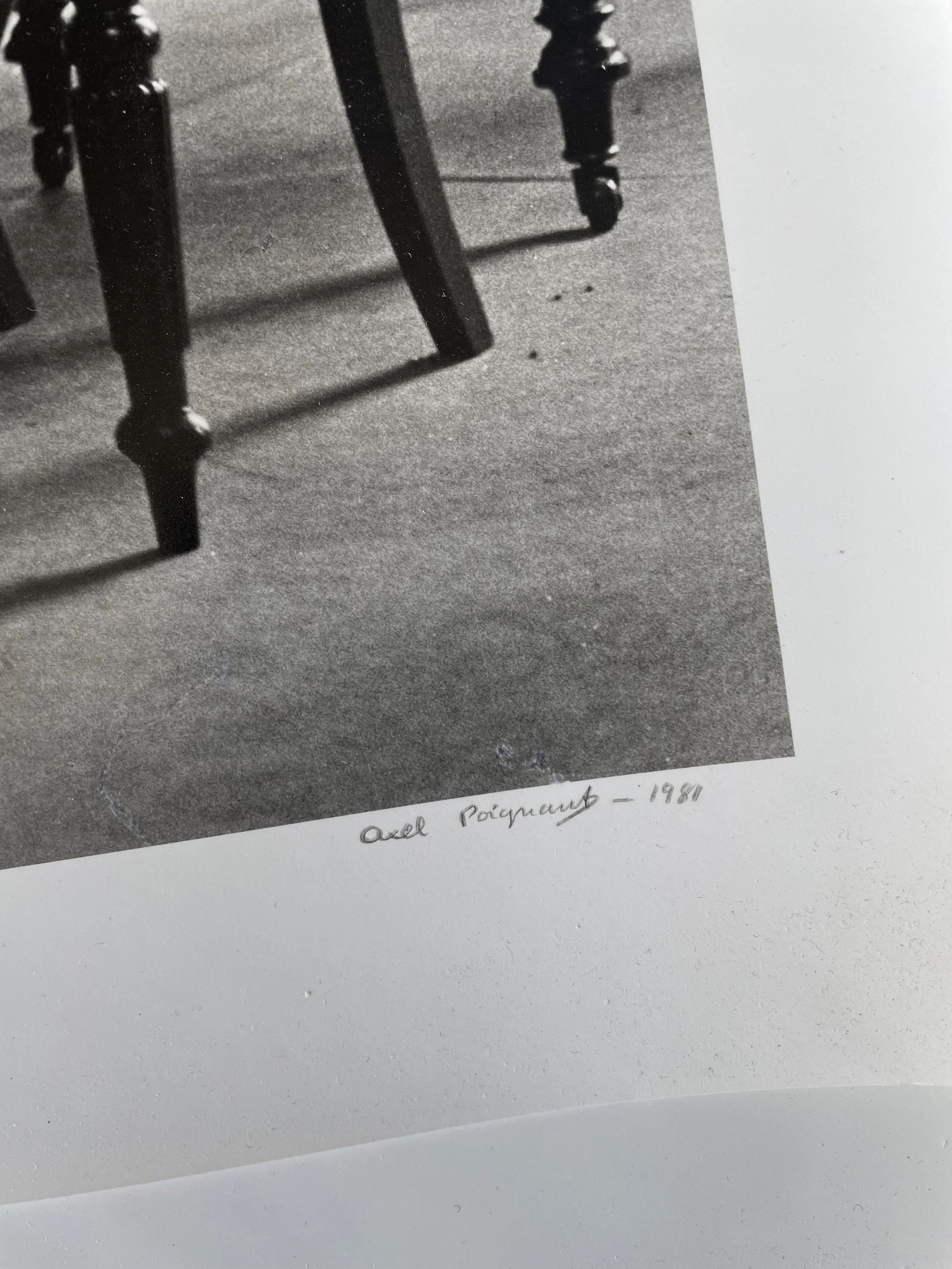
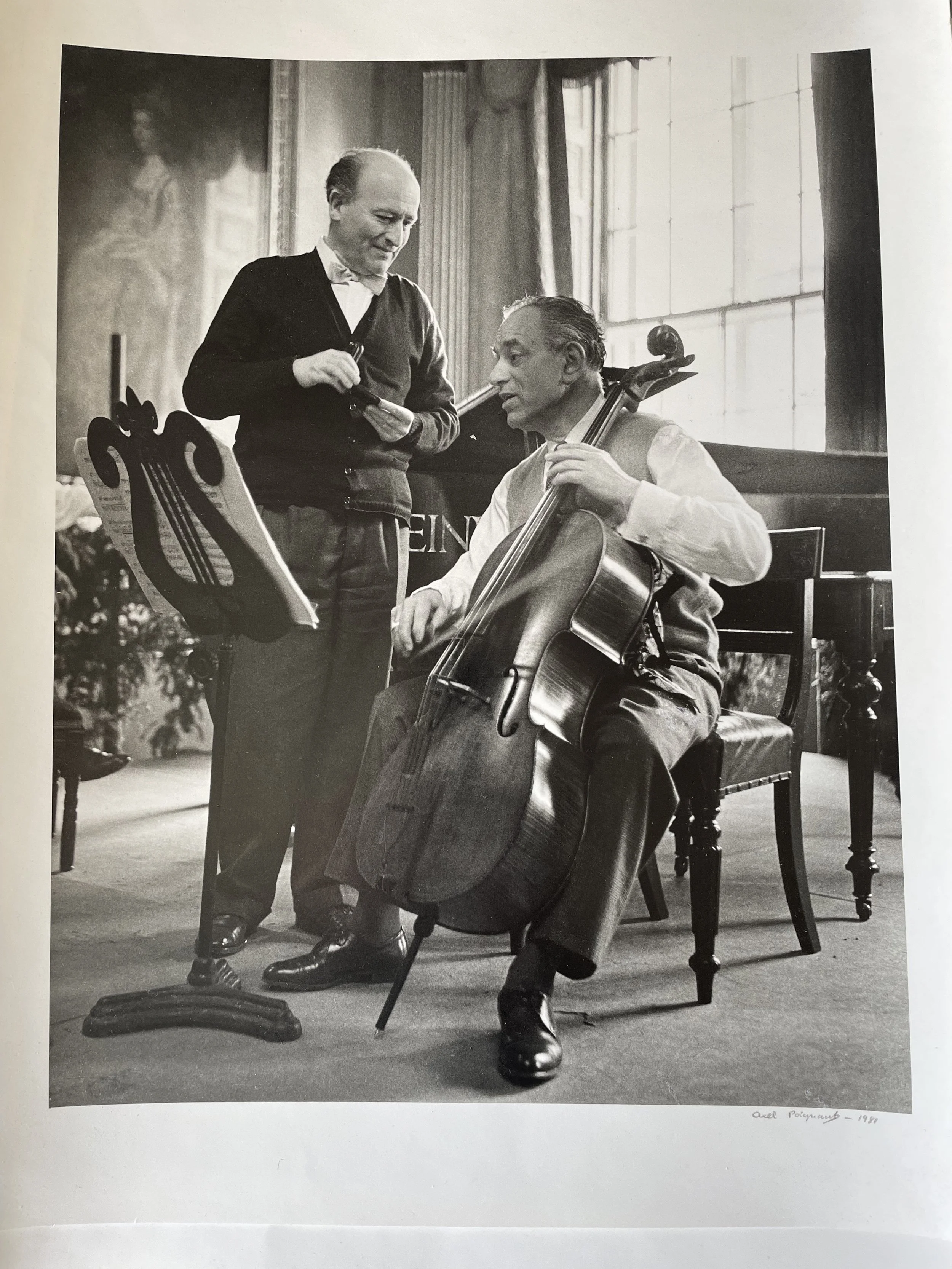
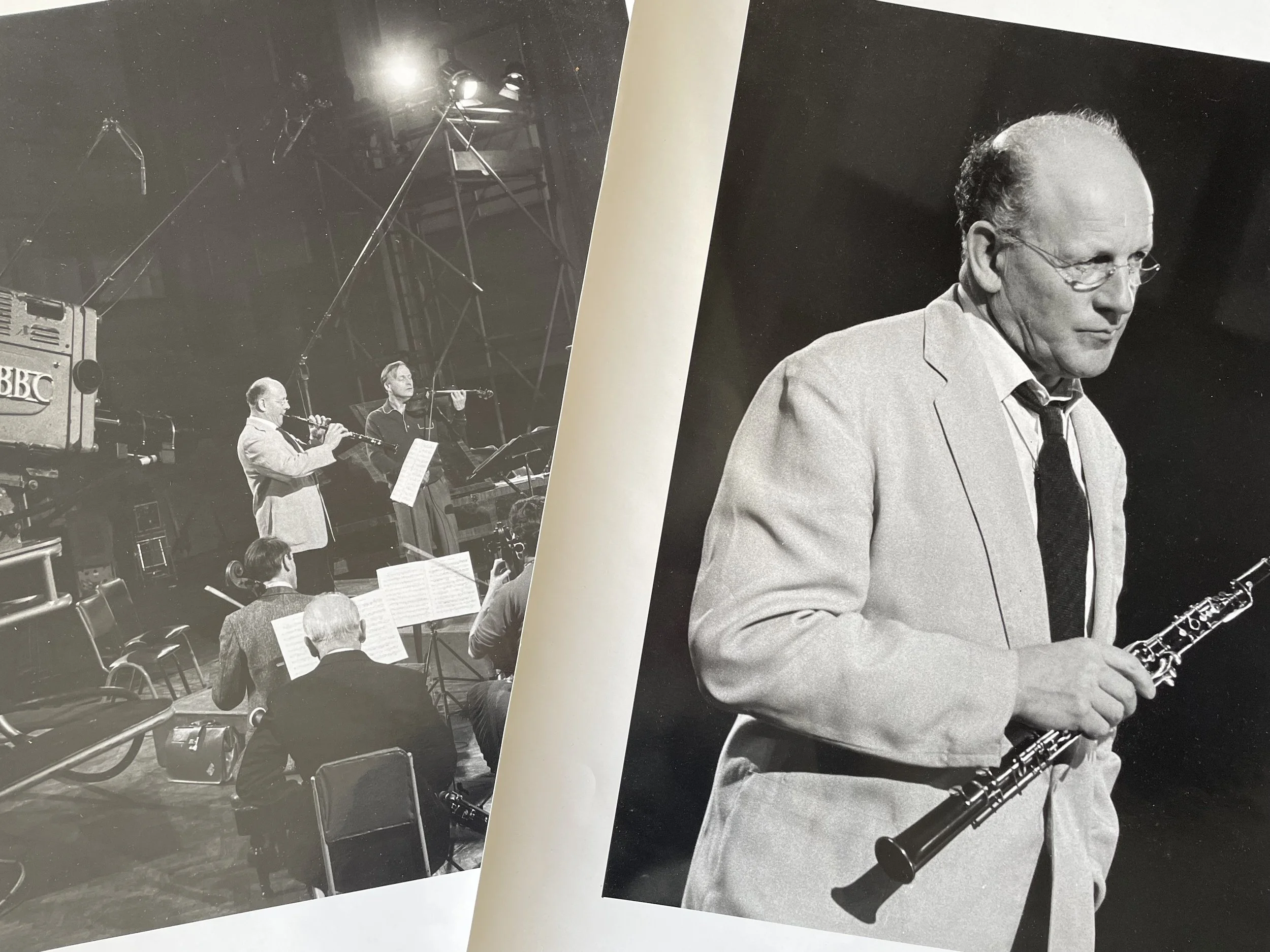
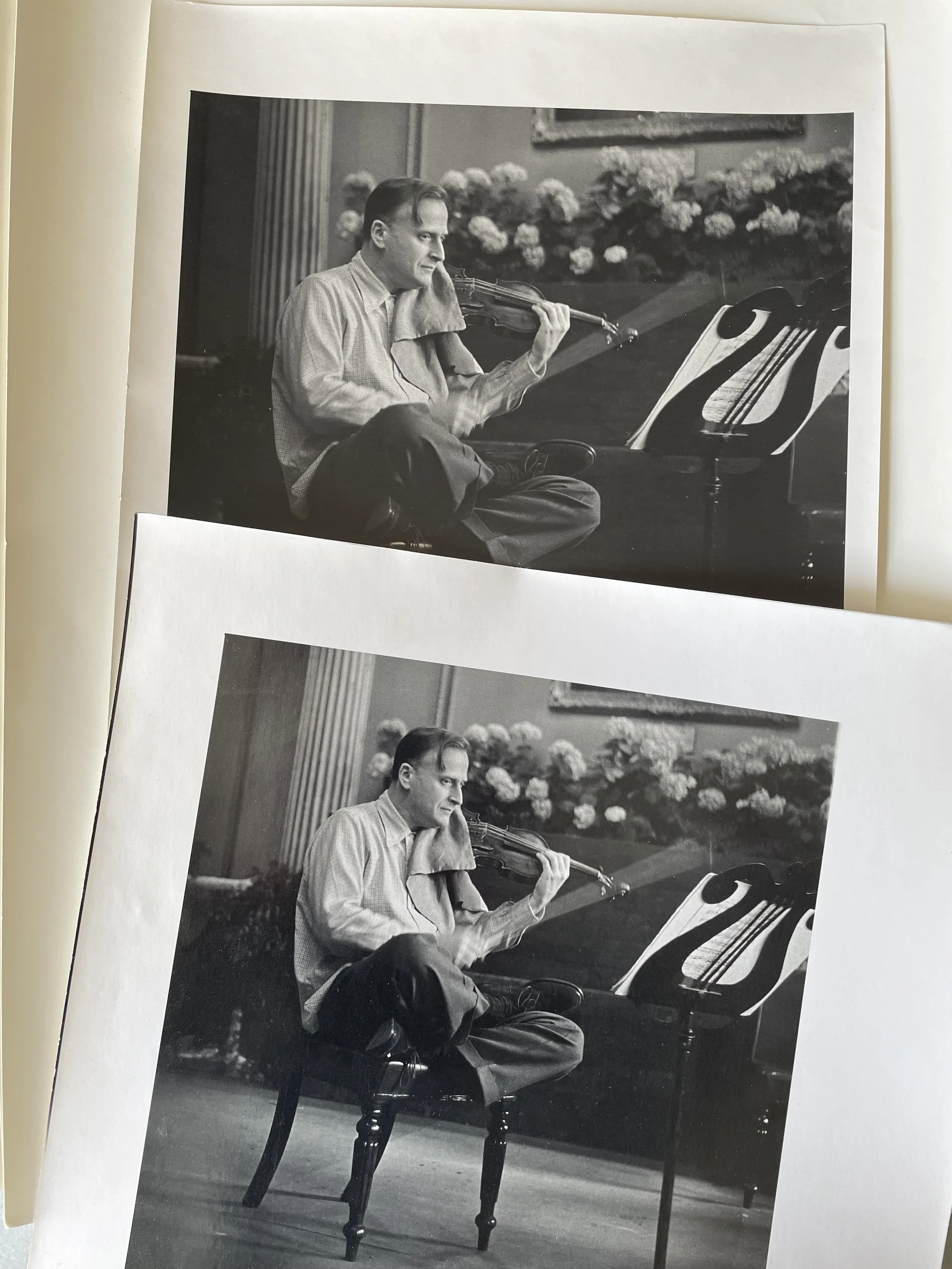
480 × 375mm and smaller. 6 extra large photographs, including 2 duplicates of classical musicians, including Yehudi Menuhin, Gaspar Cassado and Leon Goossens, by the Australian photographer, Axel Poignant (1906-1986). The large photograph of Cassado and Kentner is signed and dated by Poignant, 1980. The photographs were taken at the Bath Music Festival in the 1950’s.
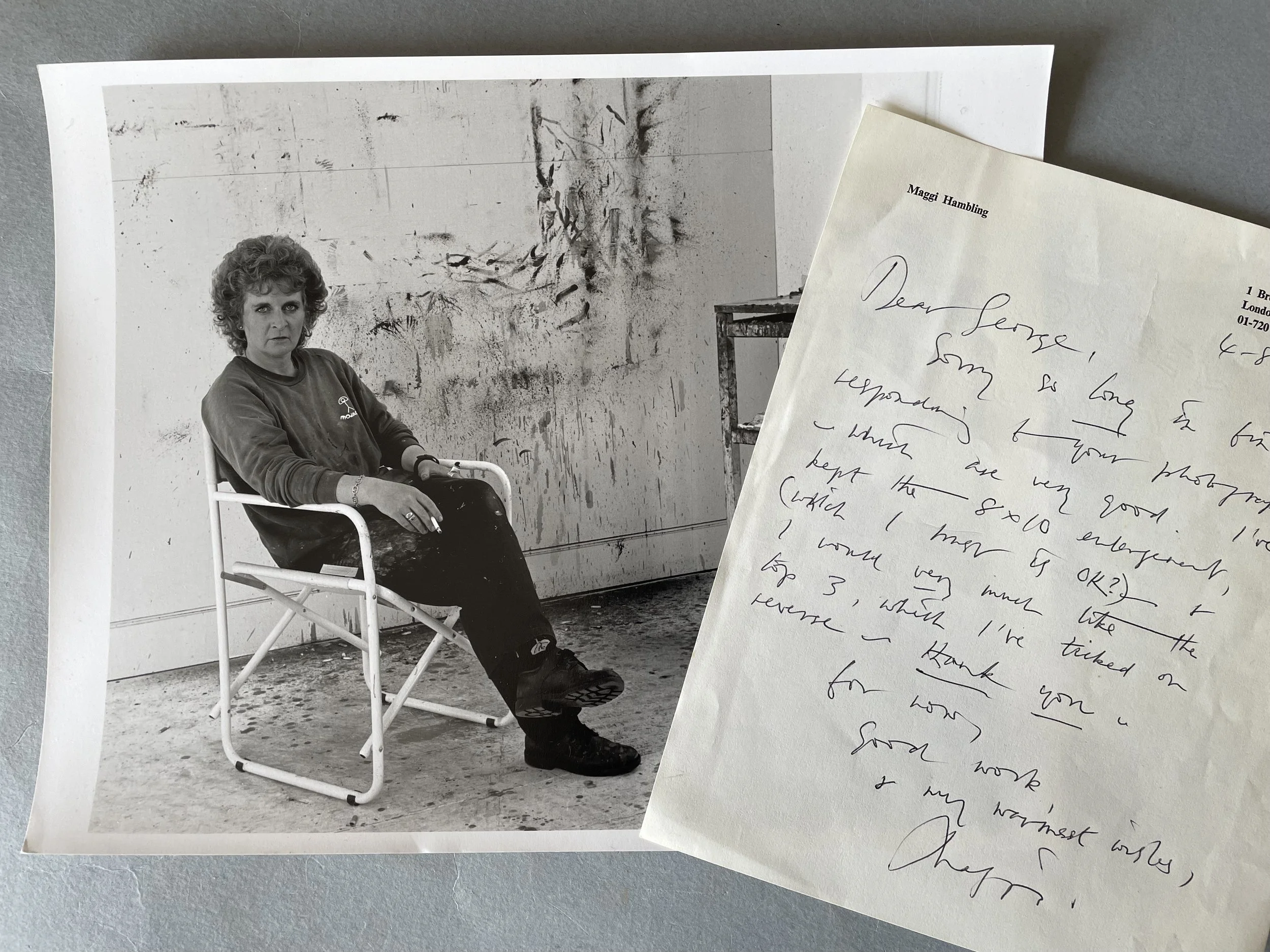
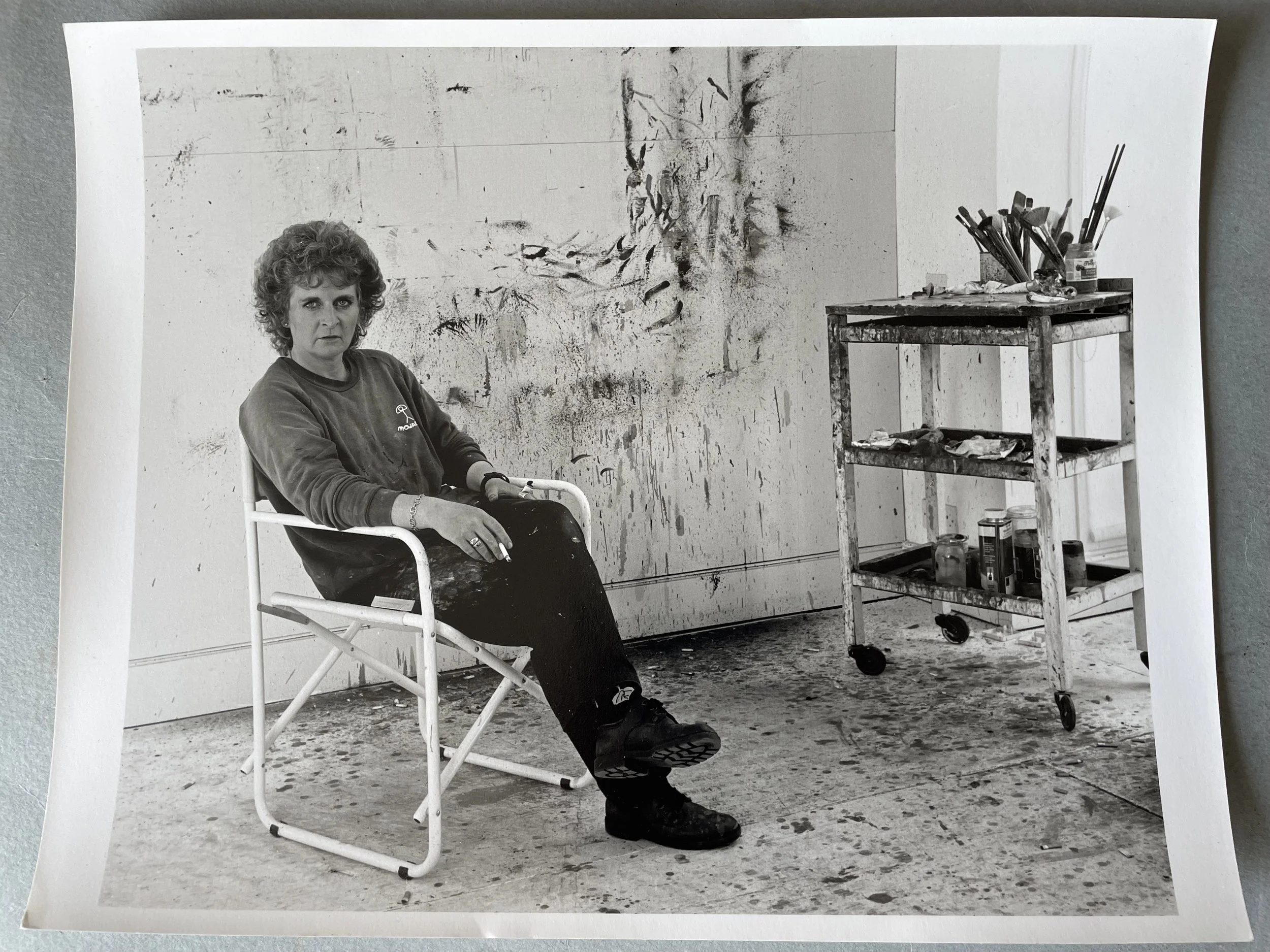
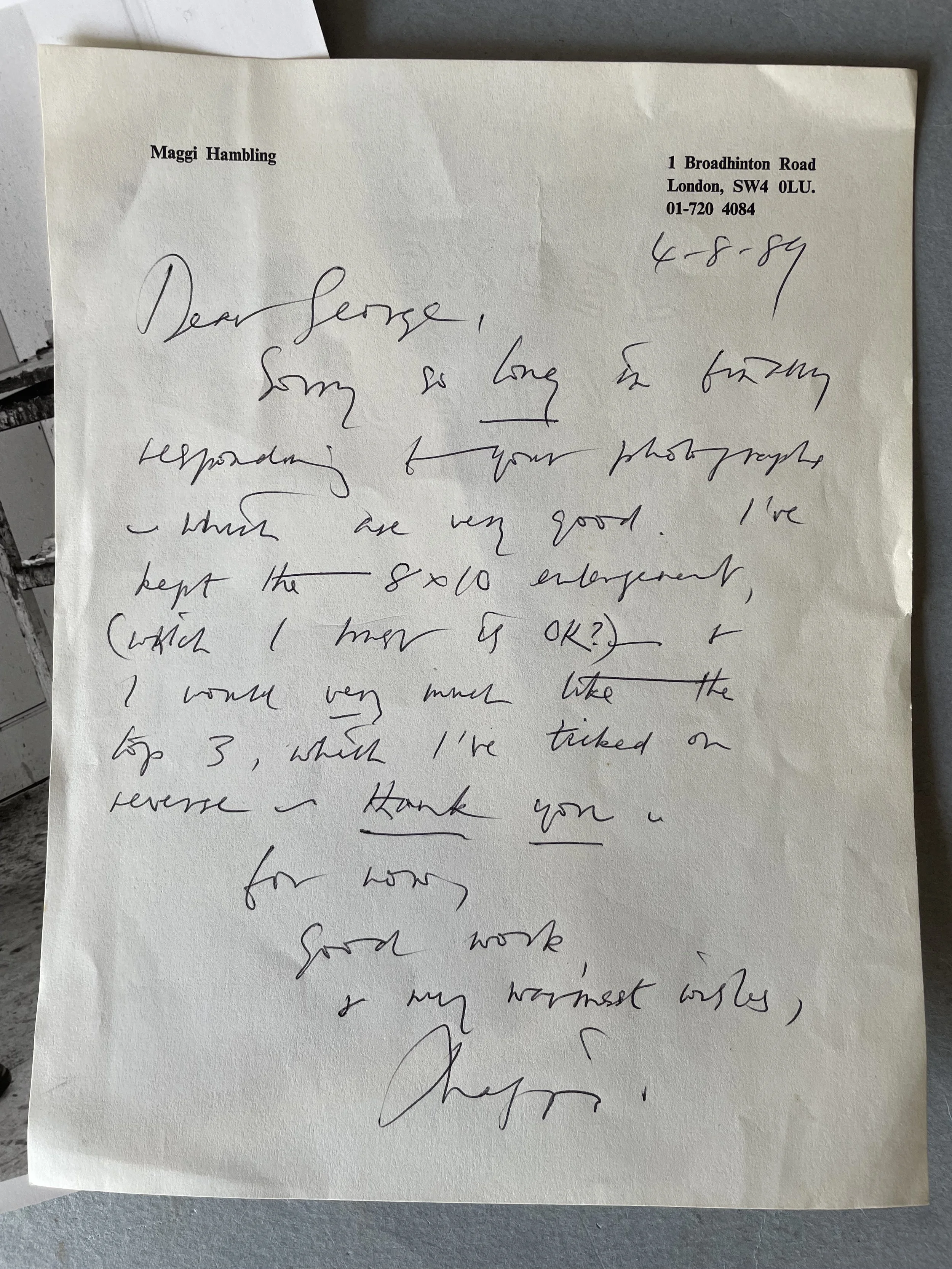
303 × 235mm photograph of the artist, Maggi Hambling (1945-), by the composer and photographer, George Newson (1932-2024), signed by Newson to the rear. Accompanied by a letter from Hambling to Newson, asking for copies.
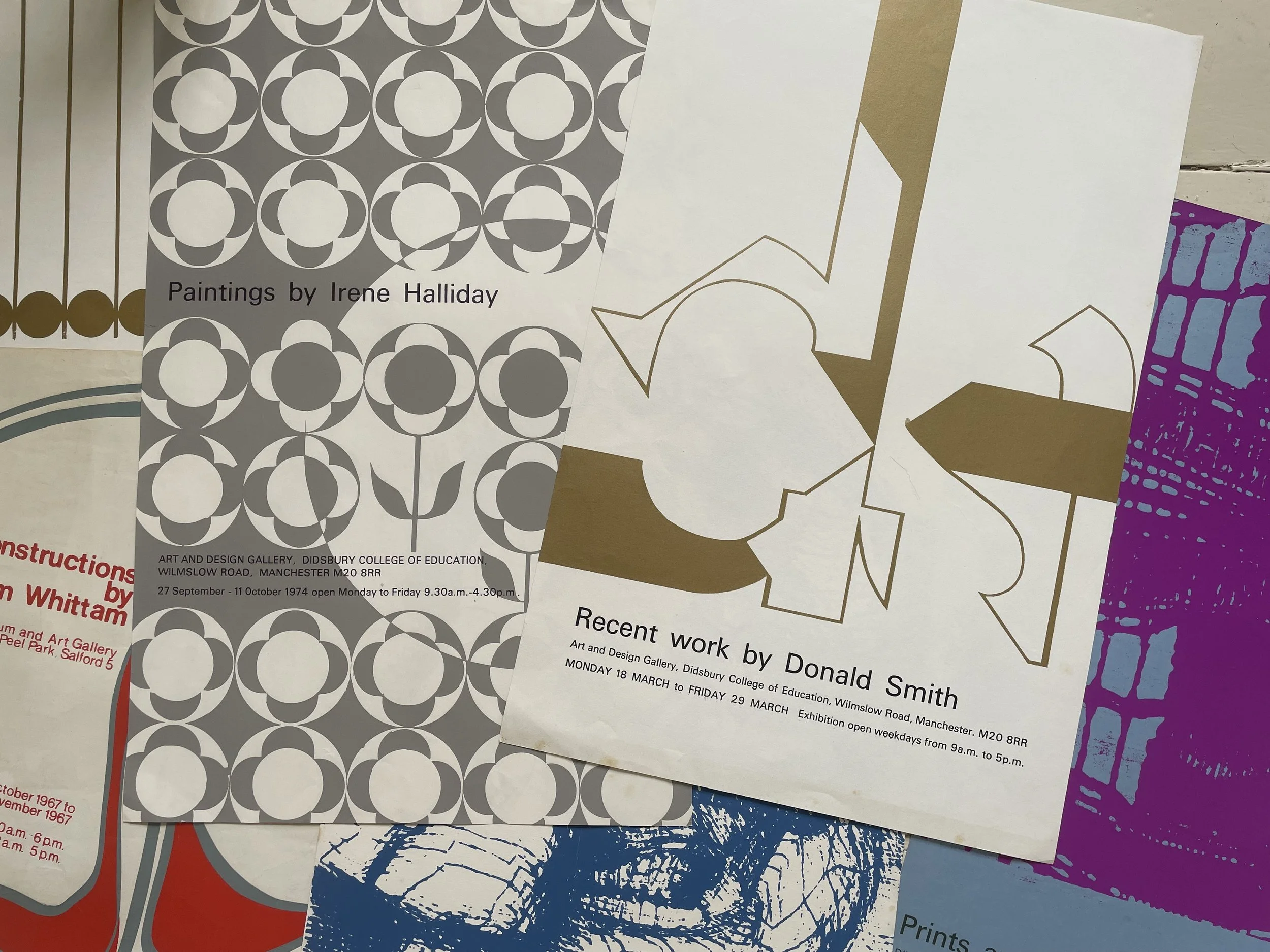
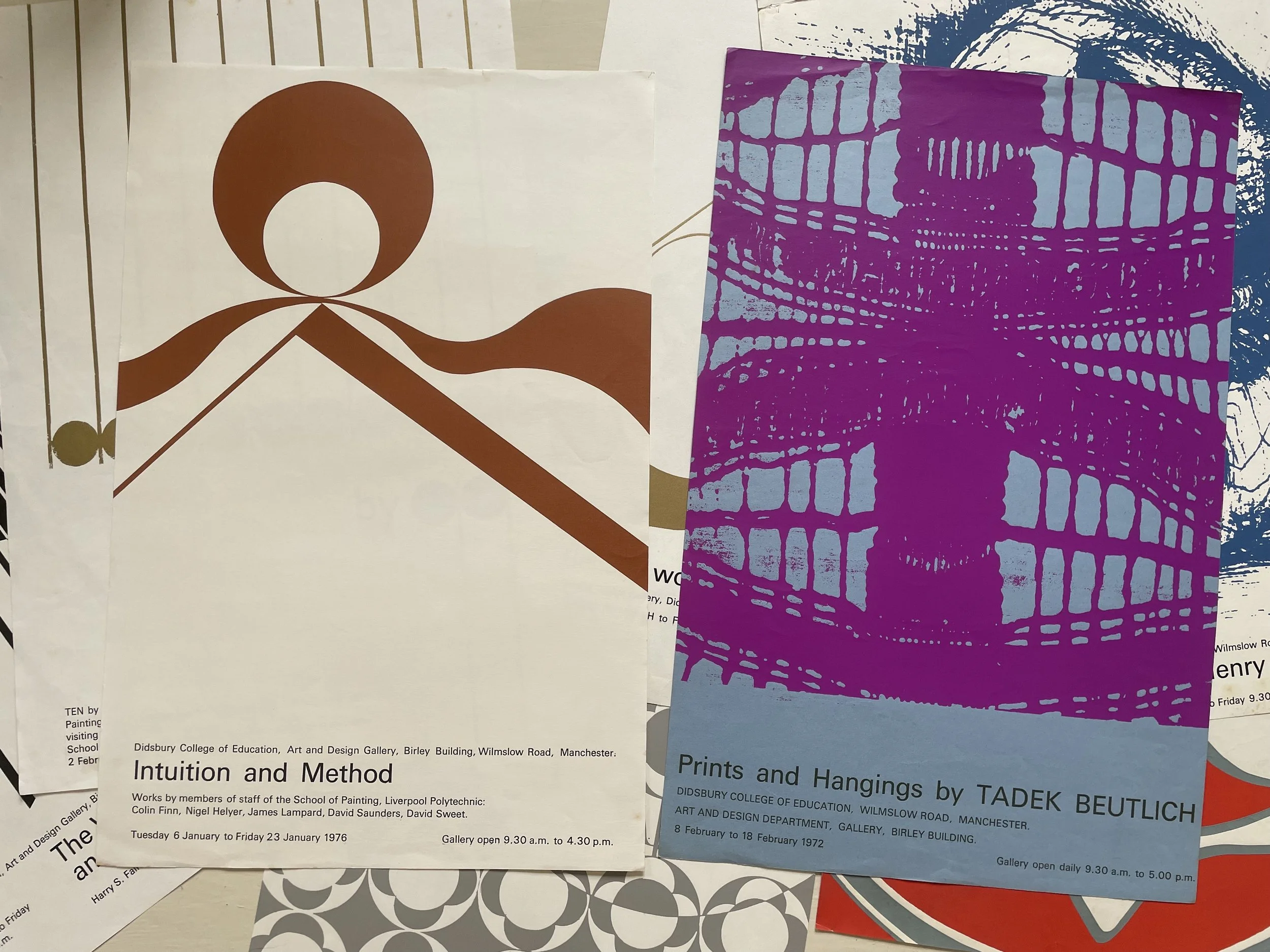
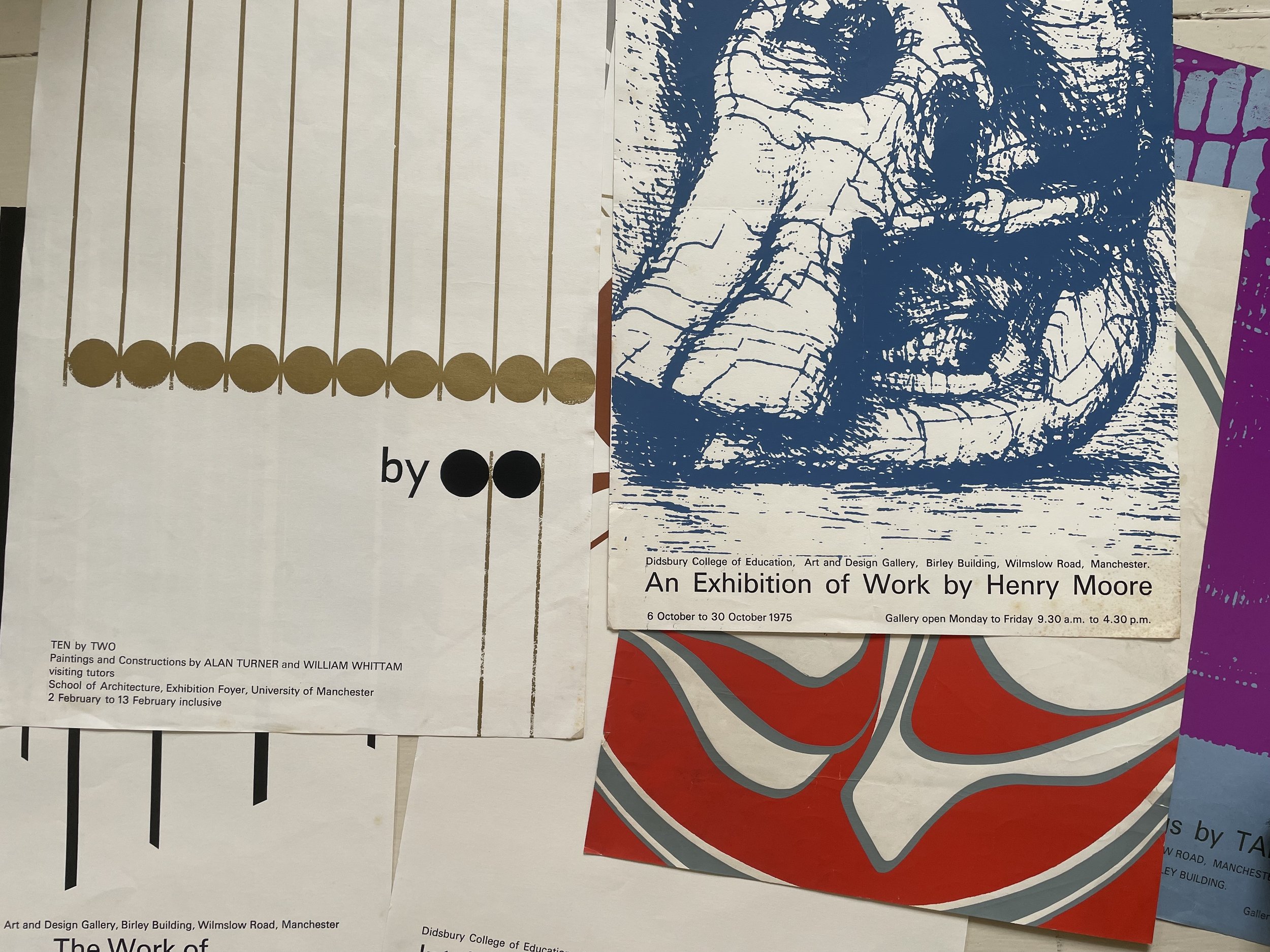
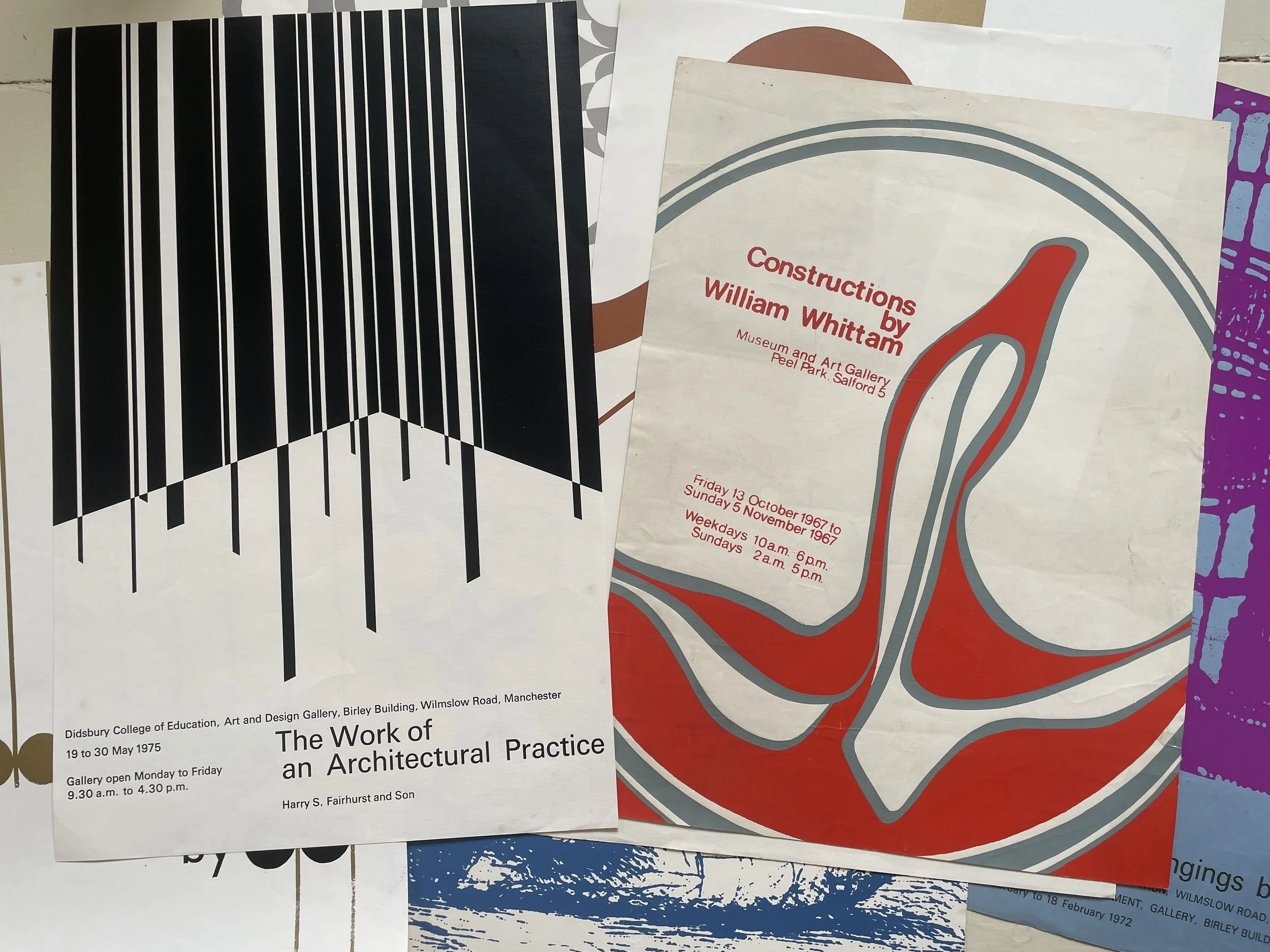
Small archive of around 40 posters advertising performances and exhibitions at Didsbury College, Manchester, between 1967 and 1977, but largely 1972-1977, a few advertising events at other colleges. Some creases, nicks and small marks, one or two with small marginal tears. Several duplicates.
The artists, Donald Smith (1934-2022) and Irene Halliday (1931-2023) led the art and design department at Didsbury College of Eduction in the early 1970’s, both establishing a reputation for encouraging the British constructivism of the ‘60’s/’70’s, and reflected in the style of most of these posters. Interestingly, Didsbury was amalgamated with Manchester Polytechnic in 1977, at a time when graphic designers Peter Saville (1955-) and Malcolm Garrett (1956-) were studying at the Polytechnic, and the work in these posters might be seen as elemental to the fertile imagination of Manchester at the time when Saville is starting his work with Joy Division and Factory Records and Garrett with the Buzzcocks, and hints of the influence can be seen in the classic works of both artists.
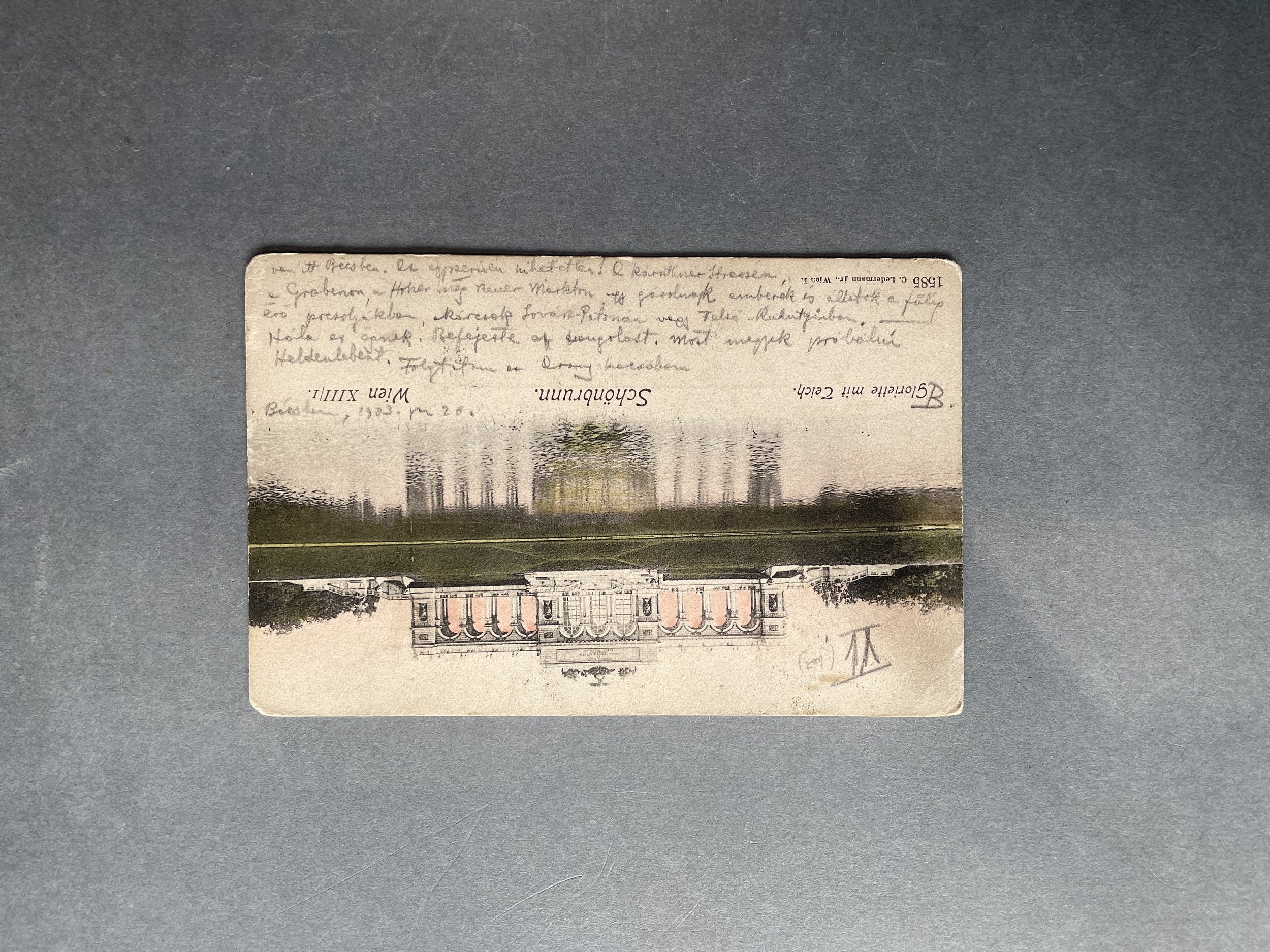
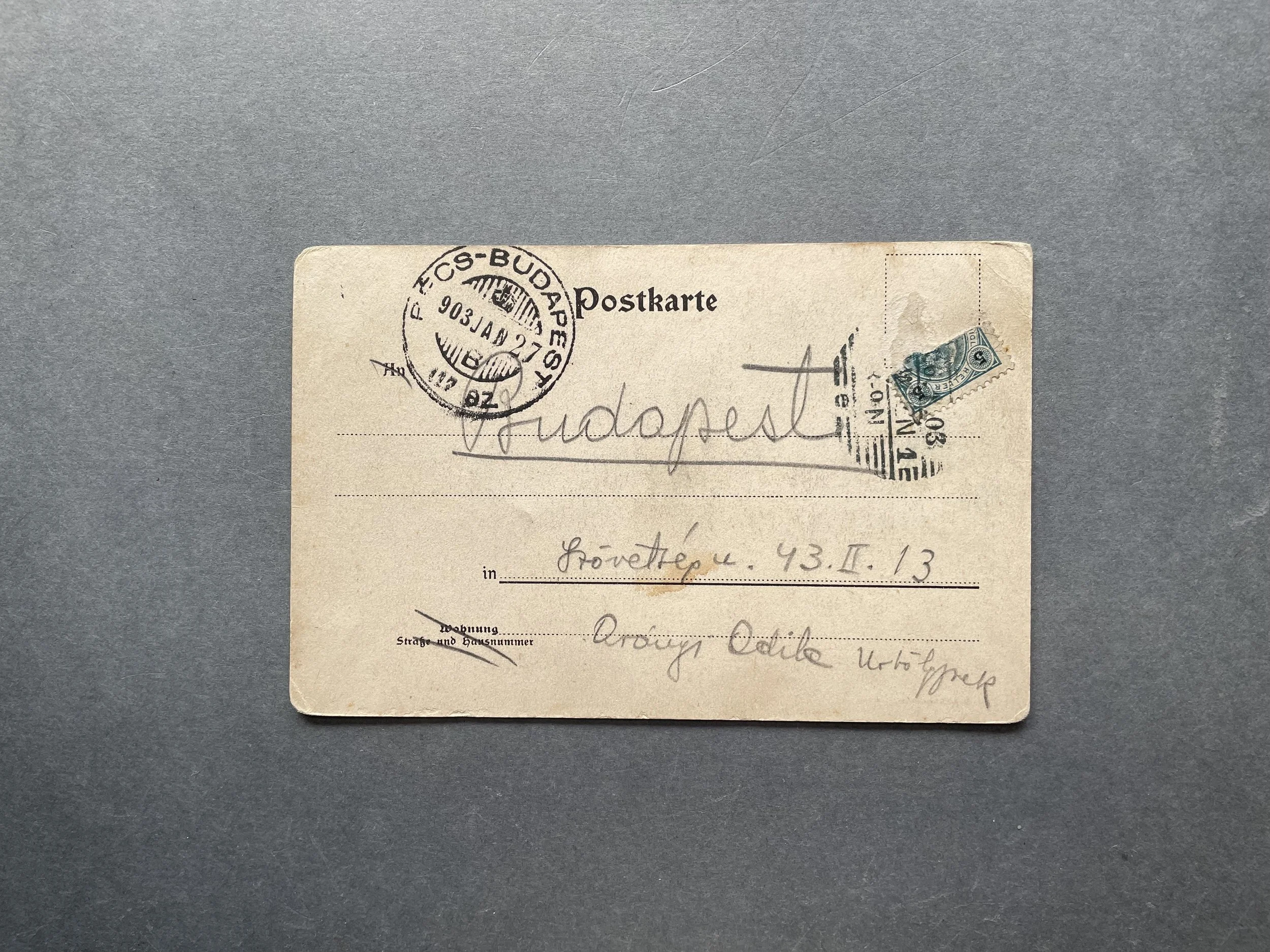
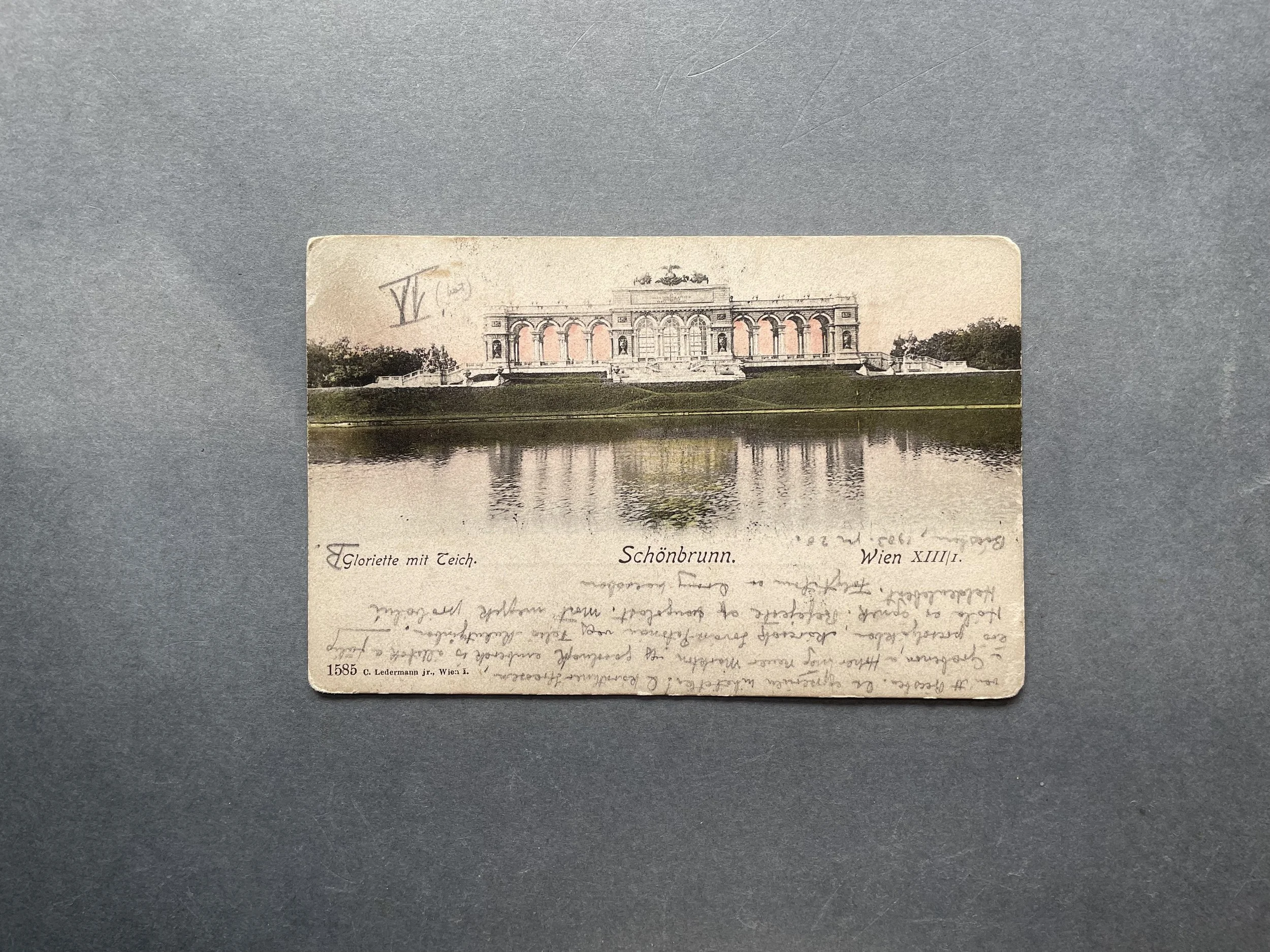
A postcard sent from Bela Bartok (1881-1945) to the Hungarian violinist Adila Aranyi, later Adila Fachiri (1886-1962). The postcard is dated January 27th, 1903, and Bartok is discussing rehearsals for the premiere of his piano transcription of Richard Strauss's Ein Heldenleben. The performance, at the prestigious Musikverein, and before the Vienna Composer’s Association, was Bartok’s first in Vienna and was a wild success, establishing his reputation around Europe.